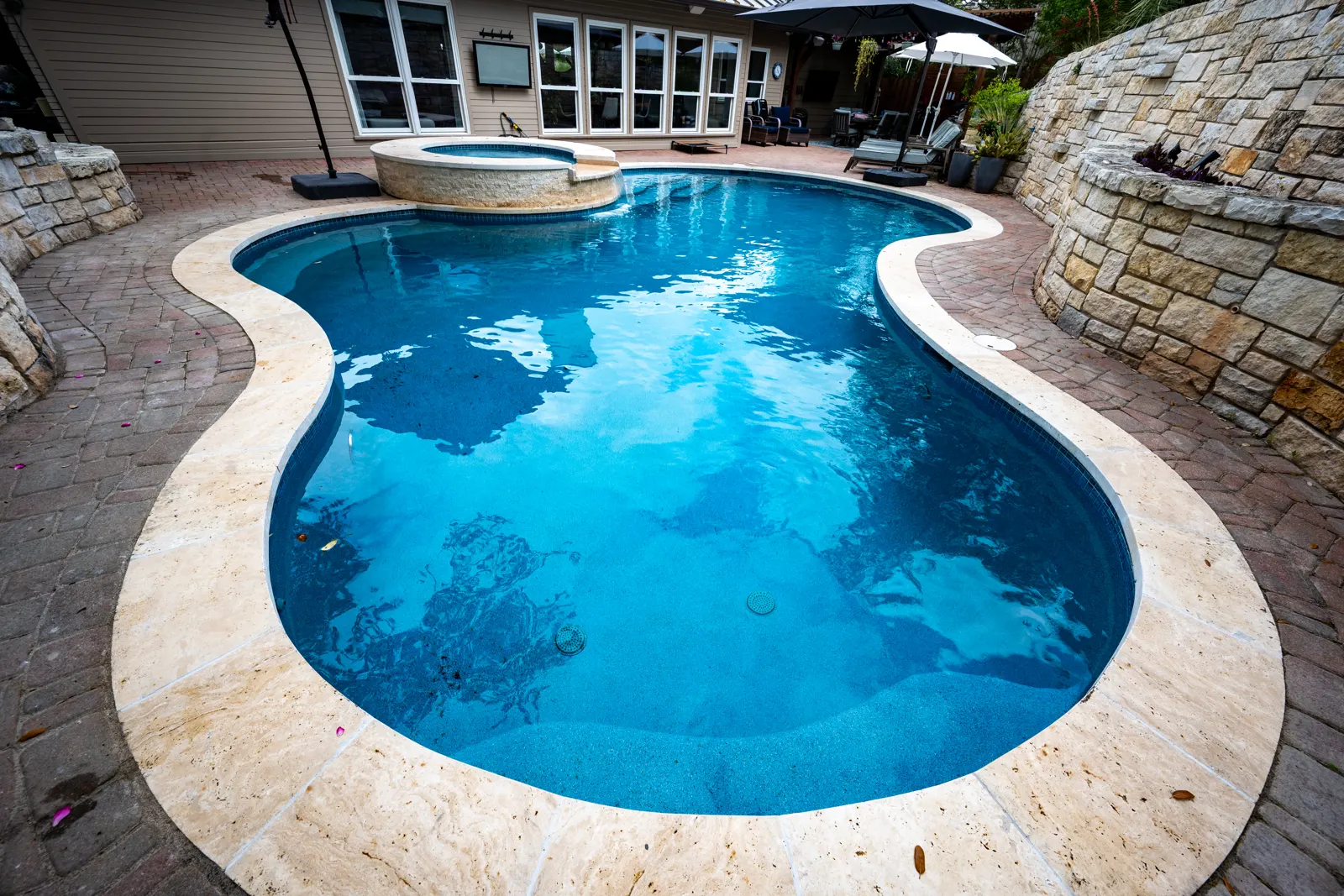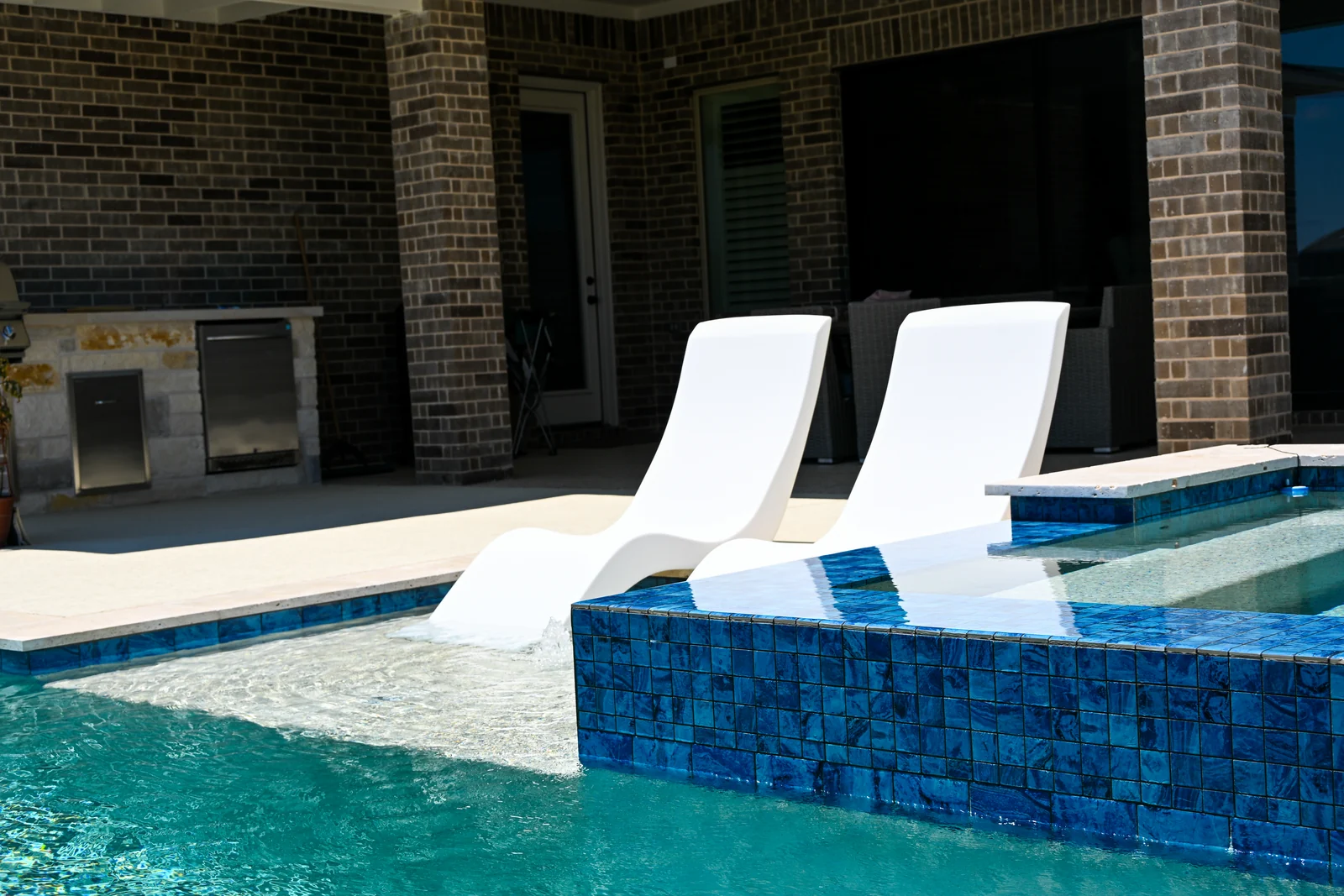
Calcium scale cleans off pool waterline tile. A bond that has failed underneath it does not, and that difference is the whole decision. Run a knuckle along the tile band and tap as you go: tile still bonded to the shell rings solid, and tile with a void behind it sounds hollow.
Scale is a chemistry problem, and it comes back if the balance that caused it does not change. Loose tile, missing grout and a hollow band are a construction problem, and no amount of cleaning touches them. Plenty of the pools we look at in the autumn have some of both.
Why Central Texas pool water leaves a line
The scale on your tile is mostly calcium your pool is required to carry. Austin Water puts the city's drinking water hardness at an average of 93 ppm, or 5.4 grains per gallon, ranging from 70 ppm to 126 ppm across the system in its 2025 Water Quality Report. Austin Water defines that hardness as dissolved calcium and magnesium from the erosion of natural deposits.
A gunite pool is then balanced well above what comes out of the tap. The 2023 Model Aquatic Health Code, published by the CDC and the Council for the Model Aquatic Health Code, sets calcium hardness for masonry pools and spas at 200 to 400 ppm, against 80 to 200 ppm for vinyl or fiberglass units. Gunite needs the calcium, because water short on it will take what it needs out of the plaster instead.
Balance is what keeps that calcium dissolved. The Model Aquatic Health Code asks for a Langelier Saturation Index between -0.3 and +0.3, a pH of 7.2 to 7.6, and total alkalinity of 60 to 180 ppm. Drift above that range and calcium comes back out of solution, and the waterline is simply where the water stops, so it is where the deposit collects.
The calcium on your tile is mostly calcium the pool is required to carry. That is why cleaning it off without fixing the balance only resets the clock.
Scale, or tile that is actually failing?
Scale is a deposit on the face of the tile, and tile failure is movement behind it. The two look similar from a lounger and feel completely different under a hand.
- A hollow sound when you tap along the band. That is a void between the tile and the shell, and voids spread.
- Tiles that have already come off, or that move when you push them. One is a repair. A row of them is a replacement.
- Grout washed out to a recess, or crumbling when you pick at it. Grout is what keeps water out of the bed behind the tile.
- Cracking that runs through tile and grout together rather than following the joints. That is the shell talking, not the tile.
- Deposit that survives a proper cleaning. If it will not come off, it is bonded into a surface that has already been etched.
The first two settle it. A pool with a sound tile band and a bad case of scale is a cleaning job. A pool with a hollow band is a tile job whether or not the scale bothers you, because water is already getting behind the tile.
The materials are specified, not chosen by feel
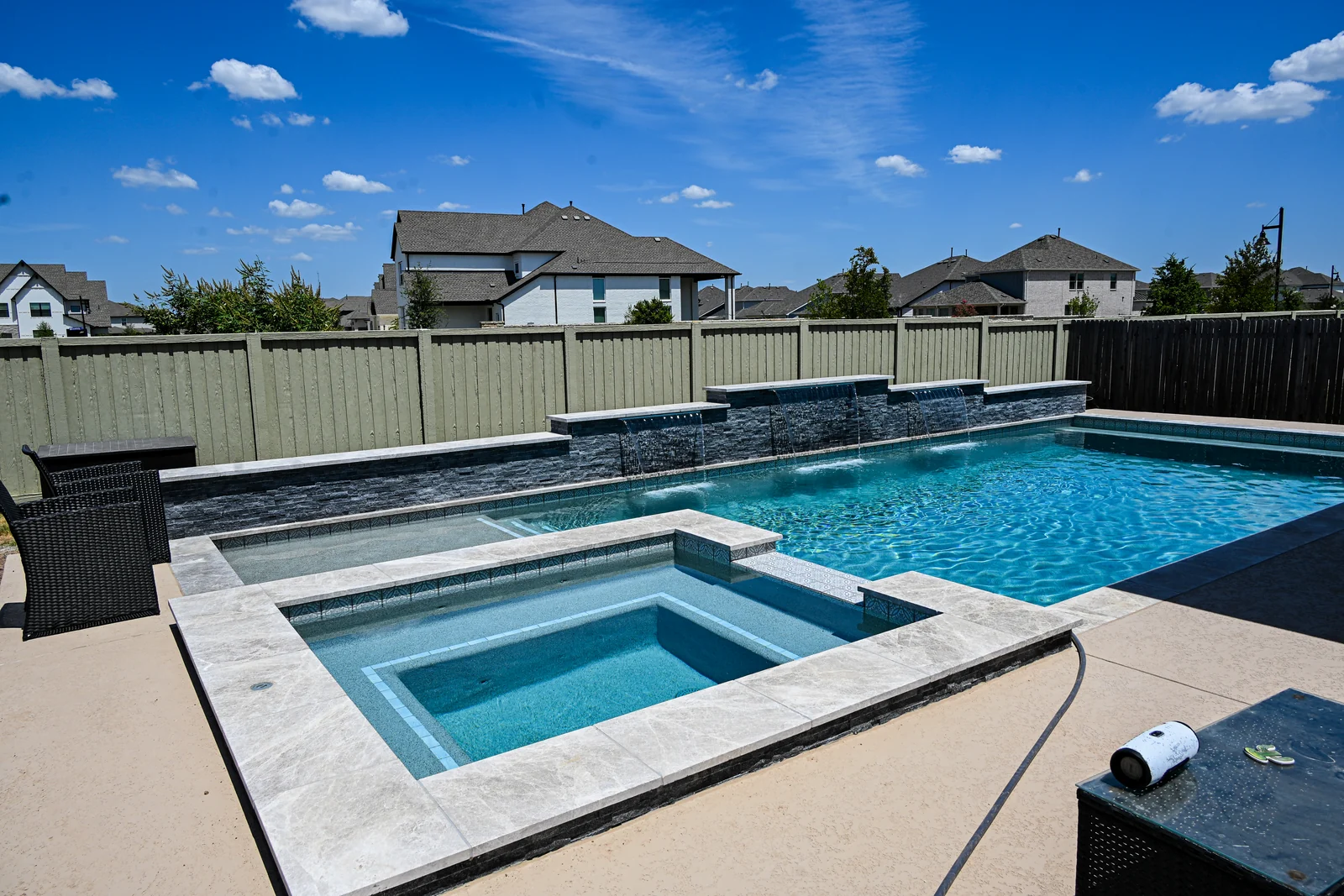
Submerged tile has its own standards, and they are the reason a waterline band is not a bathroom floor. LATICRETE recommends mortars meeting ANSI A118.15 HET and ANSI A118.4 HET for submerged applications, and says the installation system has to cure sufficiently before the pool is filled.
Grout is specified the same way. The Custom Building Products specification for pools and water features cites ANSI A118.6 for cement grout, ANSI A118.7 for premium cement grout, and ANSI A118.3 for epoxy. Custom Building Products also notes that epoxy grouts are not completely UV stable and that colors may fade or bleach with exposure, which is worth knowing on a band that sits half in the sun.
Why the calendar decides more than you would expect
Waterline tile is set on a drained pool, and the mortar has to cure before the water comes back. That single requirement is what makes this an autumn job in Central Texas rather than a summer one.
The cure times are manufacturer specifications rather than estimates, and they vary more than most people expect. MAPEI publishes 3 days of curing before filling for Ultraflex LFT Rapid, 14 days for Kerapoxy CQ, 21 days for Adesilex P10 used with Keraply, and 28 days for standard Ultraflex LFT. SGM specifies a minimum of 7 to 14 days before water exposure for its glass mosaic thin-set in any submerged application, with minimum cure reached at 12 to 24 hours and grouting 48 hours after that.
Temperature is the other constraint, and it is the one that rules out a January start. SGM requires materials and the affected area to stay above 50F for 24 hours before placement and 72 hours after, and below 100F throughout. The National Weather Service office for Austin and San Antonio reports that Camp Mabry averages about 12 sub-freezing days a year, with the average first freeze on November 29 and the average last freeze on February 25, and January normal highs in the low 60s with normal lows in the low 40s.
Put those together and the window sets itself. A pool needing a week or more of cure wants refilling before that November 29 average first freeze, so tile work started in October has room to breathe. Work started in January fights the 50F floor at both ends of the placement, and a cold snap mid-cure is not something anyone can schedule around.
It is usually worth doing with the plaster
The pool has to be drained for either job, so doing tile and surface in one visit means paying for one drain rather than two. Our post on when to replaster a pool has the hand test that tells you whether the plaster is close, and if it is, tile and surface belong in the same scope. If the plaster is genuinely fine, we will tell you the plaster is fine and quote the tile on its own.
Waterline tile sits inside our pool renovation work, and we do it on pools regardless of who originally built them. On a custom pool construction the same mortar and grout standards apply from the first day. Whichever one you are looking at, the honest first step costs nothing: go and tap the tile.