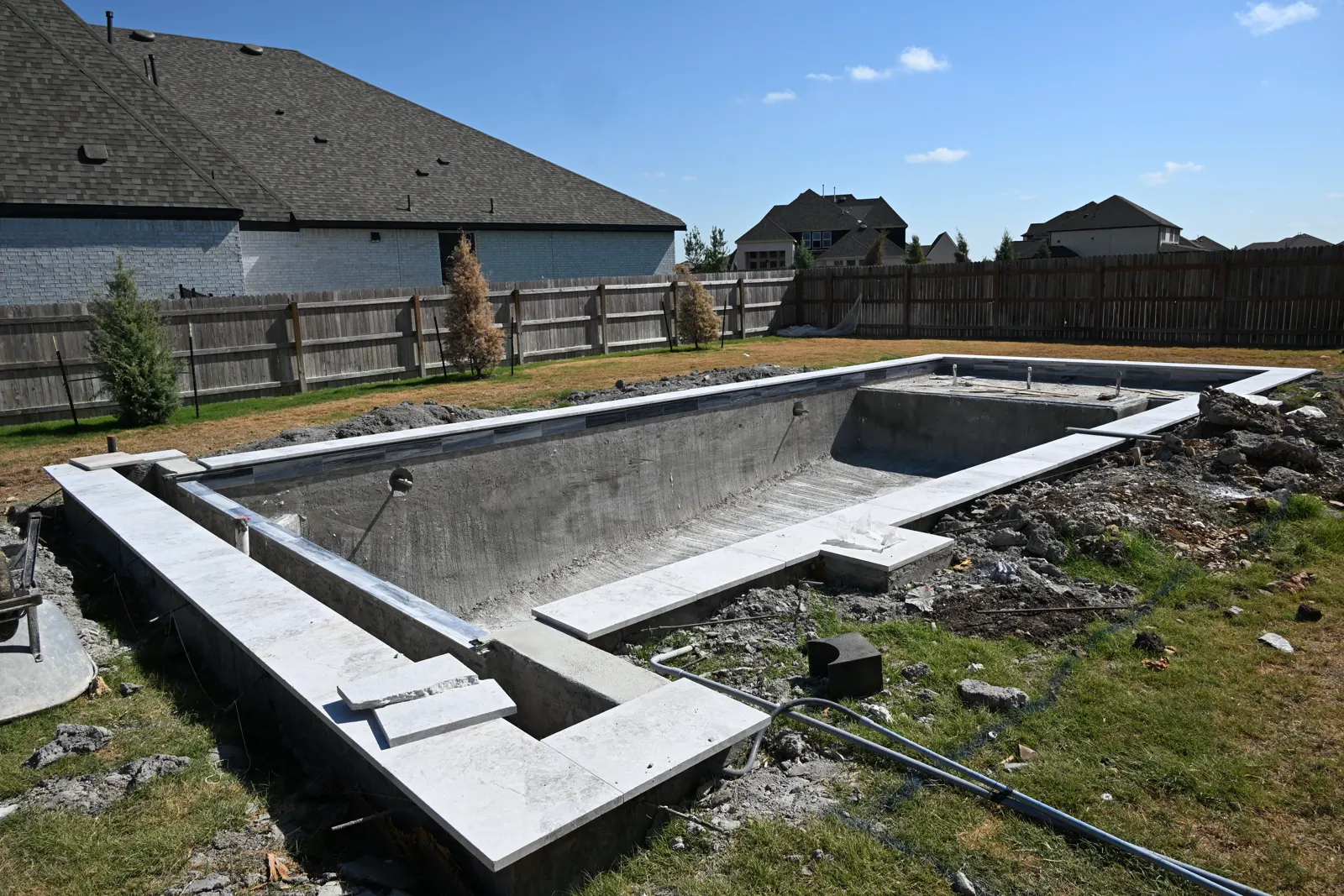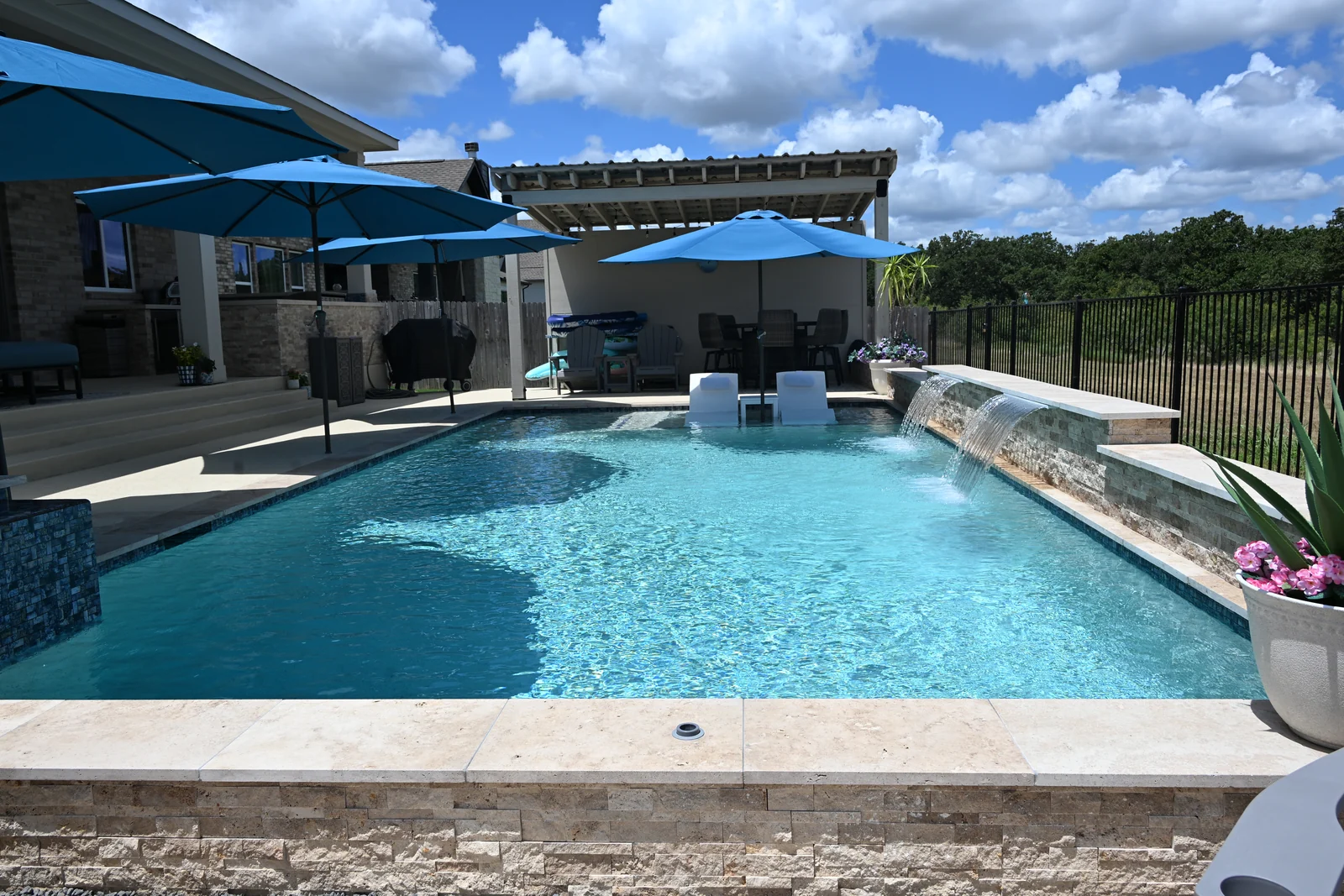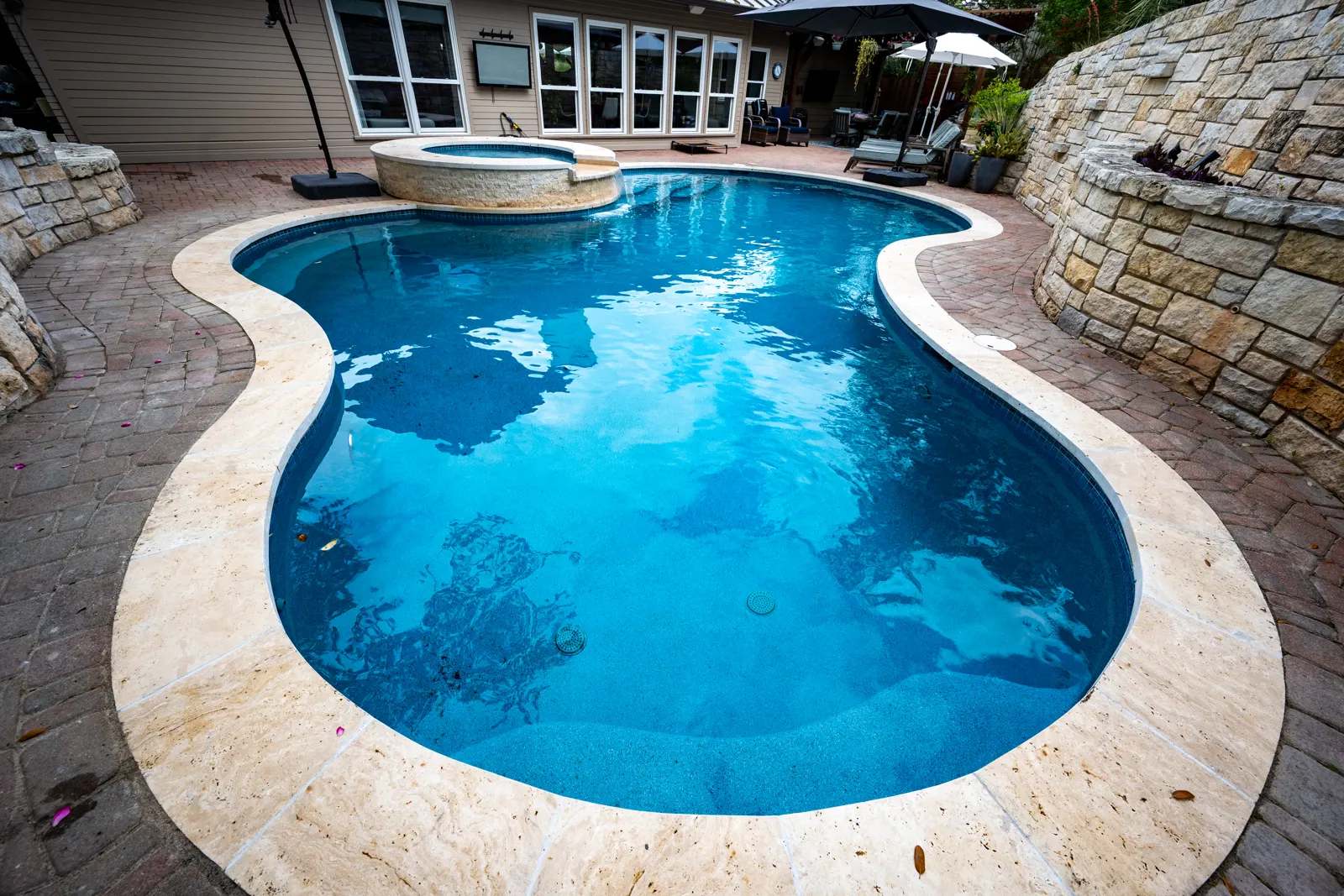
Renovate an old pool when the shell is sound and you like where the pool sits and what shape it is. Build new when the shell is failing structurally, or when the pool you want is a different size, depth or layout from the one in the ground. Almost everything else in an old pool can be renewed.
That is the short version, and it holds for most of the Liberty Hill, Leander and Georgetown pools we look at. The longer version is about what a renovation actually replaces, what it cannot, and what the building code expects of the parts that are new.
What a renovation can renew
A renovation replaces the surfaces and systems that wear out, and leaves the concrete shell in place. On a typical pool renovation that list covers:
- The interior finish. The National Plasterers Council says pool plaster can last up to 20 years with proper care, and when it goes, the shell underneath is chipped clean and refinished in plaster, quartz or pebble. Our replastering post covers how to tell when.
- Waterline tile and coping. Both come off and go back on new, and the coping is the moment to fix a deck joint that was built wrong. The International Swimming Pool and Spa Code requires the isolation joint where coping meets a concrete deck to be water tight, and decks and coping to be slip resistant.
- The deck, within limits. The same code caps a concrete deck's slope at 1/2 inch per foot.
- Equipment: pump, filter, heater, controls. This is where old pools fall furthest behind, covered below.
- Lighting. The US Department of Energy says LEDs use up to 90% less energy and last up to 25 times longer than incandescent bulbs, which is why an old incandescent pool light is usually replaced rather than relamped.
- Add-ons that fit the existing shell: a spa, a water feature, automation. A tanning ledge or bench needs structural work and a full drain, so it is planned with the replaster.
What a renovation cannot change
A renovation cannot move a pool, make it meaningfully larger or deeper, or change its basic shape. Those are properties of the shell, and the shell stays. If the pool is in the wrong place on the lot, too shallow for what you want, or a shape you will never like, no finish fixes that, and building new is the honest answer.
The other thing it cannot fix is a shell that is failing. The American Shotcrete Association calls a crack of 2 to 2.5 mm sizable in a water-containing structure and says to consult the pool's design engineer on repair, such as epoxy injection or polyurethane grouts. Its position statement on pools says water passing through the concrete of a shell is a sign of flawed material or placement, and that a shell's structural requirements must be evaluated by a professional engineer.
A sound shell is the expensive part of a pool, already built and already paid for. That is the whole case for renovating.
How long a gunite shell is meant to last
A well built concrete shell is designed for decades, not years. The American Shotcrete Association reaffirms a 4000 psi minimum 28-day compressive strength for pool shell concrete, gunite included, and notes that water-containing structures designed to the ACI 350 standard are expected to be serviceable for at least 50 to 100 years. Not every older pool was built to that standard, which is why the shell gets looked at first, before anyone talks about tile colors.
The questions that decide it
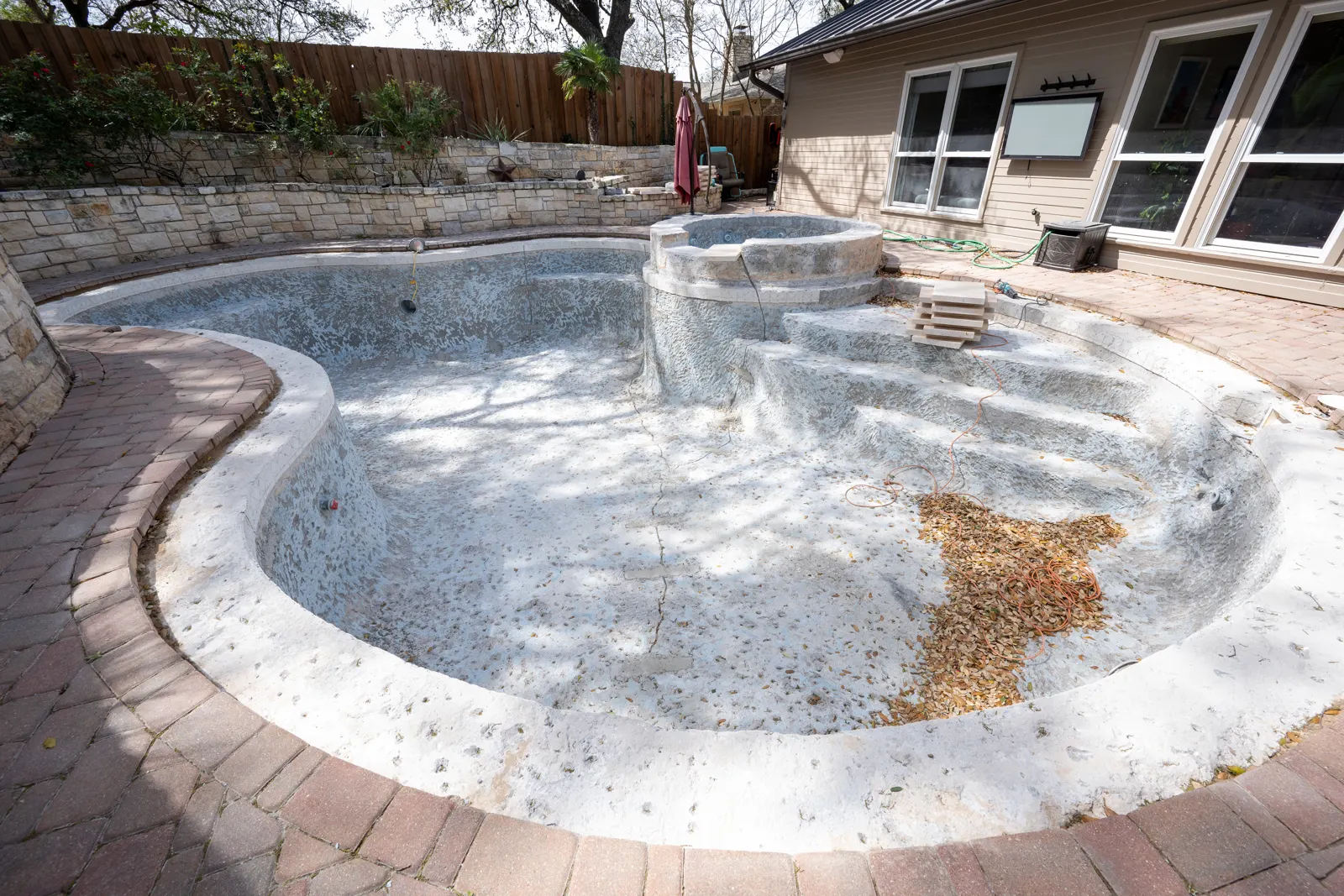
- Is the shell sound? Drained, cracks are mapped, and anything structural is assessed before a finish is quoted. A hairline in the plaster and a crack through the concrete are different conversations.
- Does the plumbing hold pressure? The code requires altered or repaired parts of existing pool systems to be tested, so leaks in old lines surface during a renovation rather than after it.
- How old is the equipment? ENERGY STAR lists a pump that is seven to ten years old among the signs it may be time to replace it.
- Is the layout the pool you want? If the answer is no, renovation is the wrong tool.
What the building code expects of renovated parts
The International Swimming Pool and Spa Code covers renovation, replacement and repair, not just new construction. Its rule for existing pools is practical: a lawfully existing pool can stay as it is, but additions, alterations, renovations and repairs must meet the requirements for a new system. In plain terms, the parts you renew come back to today's code, and the parts you leave alone do not have to.
The same code requires a permit to alter or repair a pool or replace a system it regulates. The City of Liberty Hill lists pools, spas and plumbing and electrical alterations among the projects that need a building permit, applies its permit rules inside city limits and to some properties in its extraterritorial jurisdiction, and lets a permit expire after 180 days unless work continues. We confirm which office covers your address and pull the permit ourselves.
Equipment is where old pools fall furthest behind
Federal energy standards for dedicated-purpose pool pumps only took effect for pumps made from July 19, 2021, so a pump made before then was never held to a federal efficiency standard at all. ENERGY STAR says the pool pump could be a home's second largest energy user, that certified in-ground pumps use 20% less energy than standard ones, and that running a pump at half speed uses one-eighth the energy. The pool code also requires timers or controls that run pumps and heaters on a schedule. Our energy efficient equipment page covers what we fit.
When building new is the better answer
Build new when the shell is failing and the engineer says so, or when the pool you want does not fit inside the one you have. In both cases a new custom pool is designed for your lot rather than inherited from it.
If you are not sure which side of that line your pool is on, that is what the first visit is for. We look at the shell, the plumbing and the equipment, and tell you plainly whether it is worth renovating. We work on pools regardless of who built them.