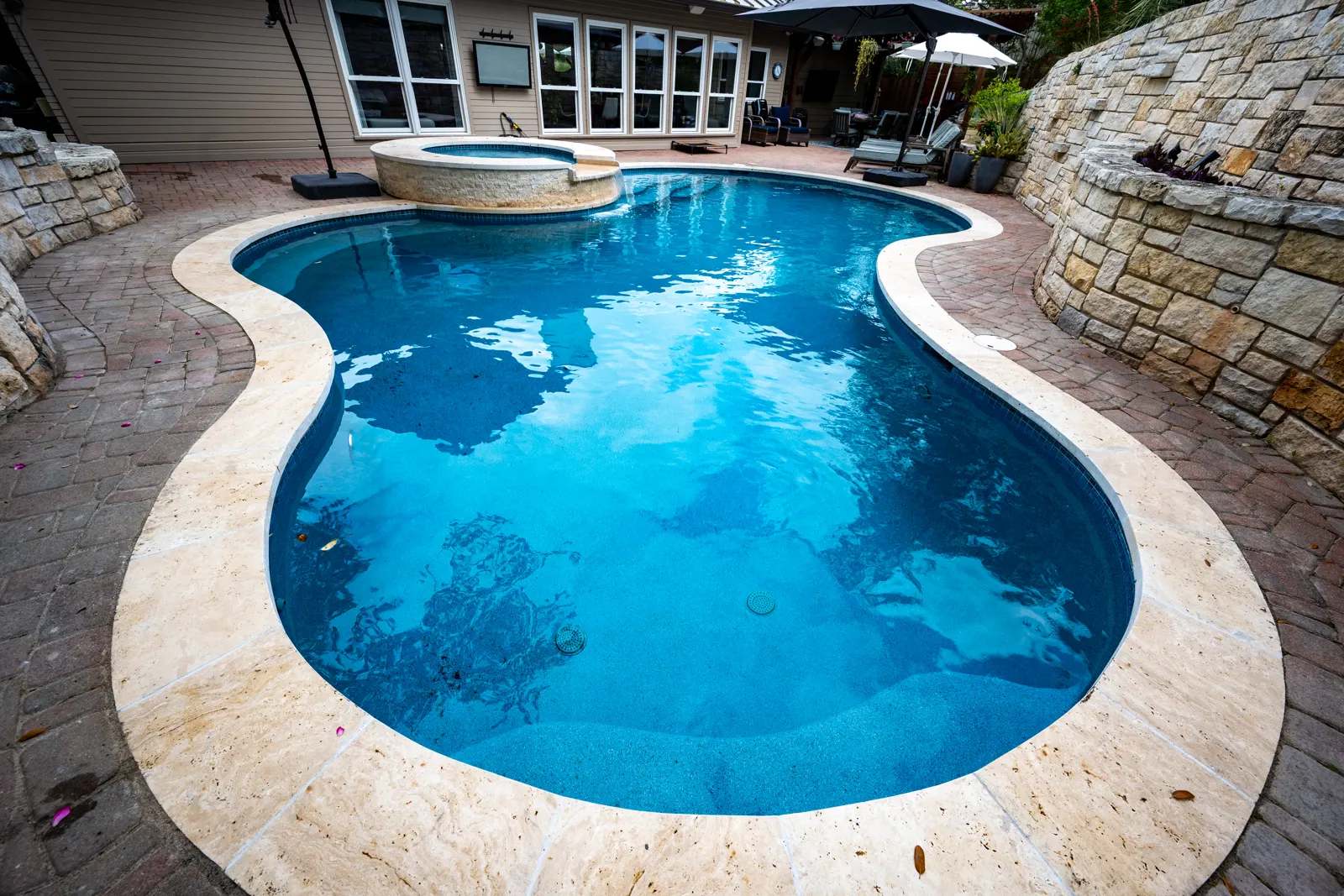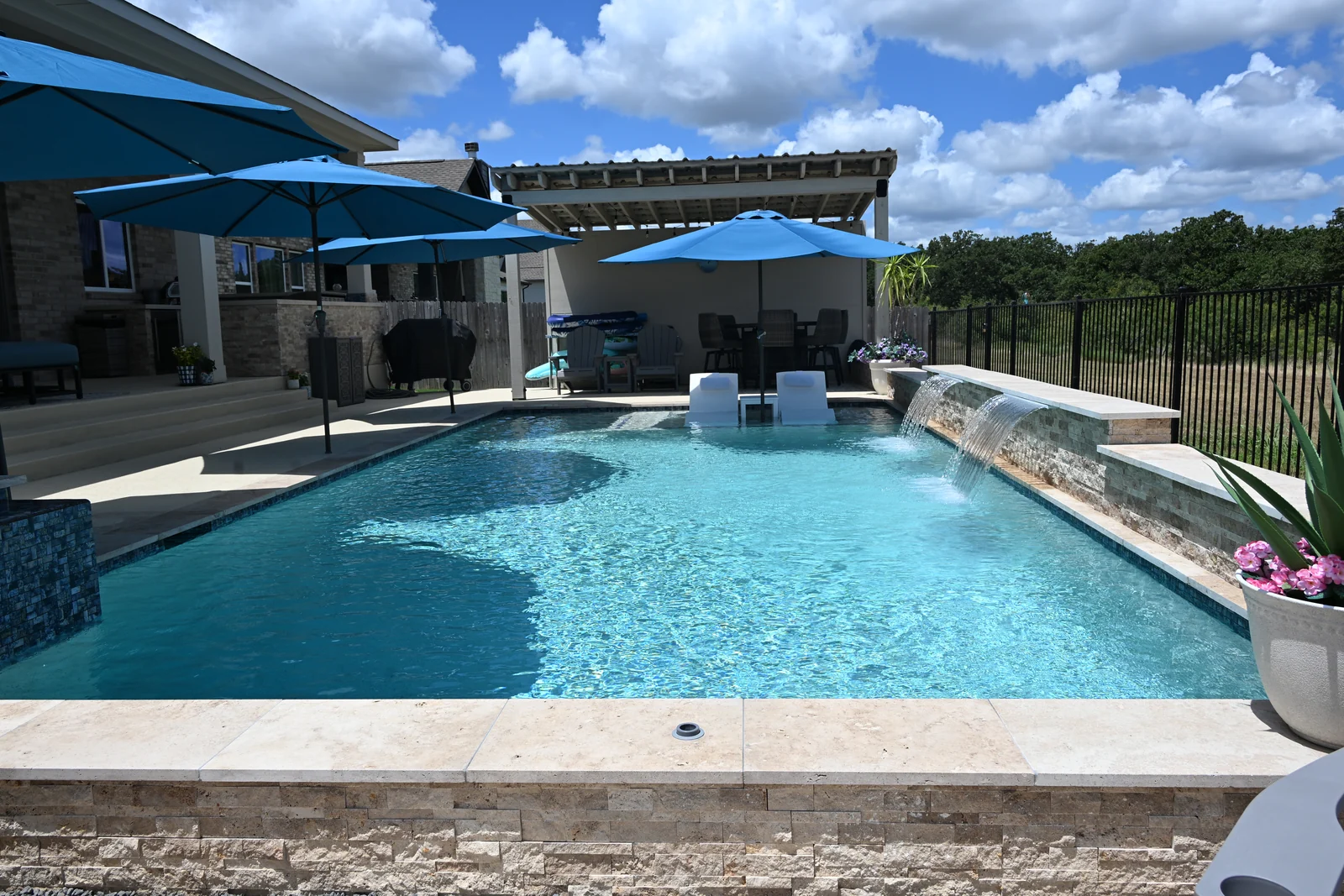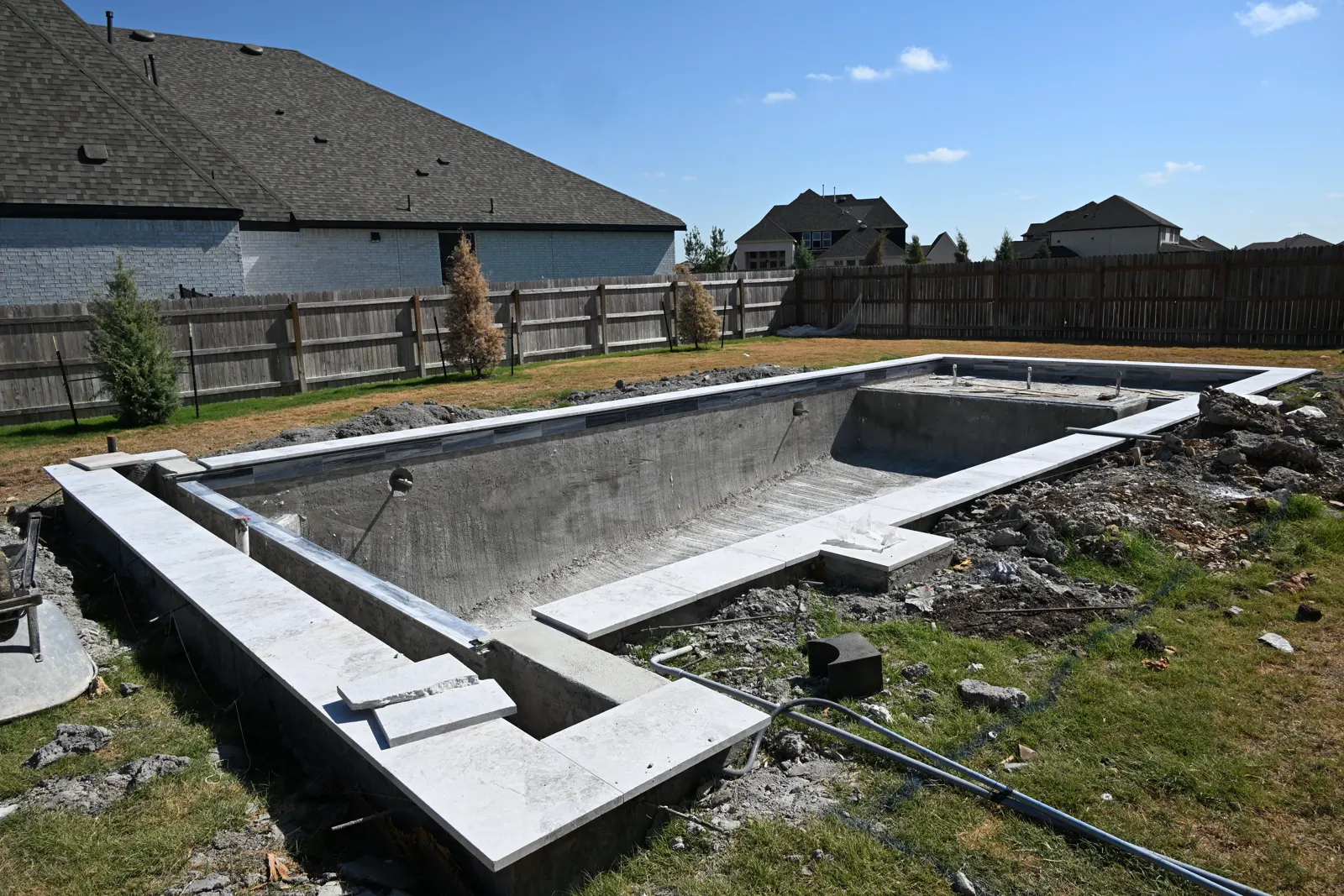
A crack in a pool is usually in the finish, not the shell, and a finish crack is cosmetic. A crack that runs through the gunite shell itself, leaks, or keeps widening is structural, and it needs to be assessed before anything is patched over it. The first job is working out which one you have, and the first rule is not to drain the pool to look.
Do not drain a cracked pool yourself
An empty pool is a different structure from a full one. The American Shotcrete Association defines watertight concrete as impermeable except under hydrostatic pressure high enough to cause structural failure, and groundwater pushes on a shell from outside. The University of Florida extension service puts the pressure of one foot of water at 62.4 pounds per square foot. Full, the pool water pushes back. Empty, nothing does.
Pools are fitted with hydrostatic relief valves for this reason: Hayward's main drain manual describes the valve as letting groundwater uplift pressure relieve into the pool. North Carolina's pool rule spells out that a pool must be designed for loading both full and empty, which is the point. So draining a cracked pool is a job for someone who checks the groundwater and the relief valve first. Leave the water in until then.
Surface crack or structural crack: how to tell
A crack in the finish is shallow, usually fine, and often appears in a web or a short run. The National Plasterers Council says crazing, its term for check cracks and hairline cracks in the finish, may be noticeable, especially in colored finishes, and is normal rather than a defect.
A structural crack goes through the shell. The signs are a crack that is wider, runs in a long continuous line, lines up across the floor and wall, steps out of plane, or sits where the pool loses water. Width is measurable: an engineering review in ASPIRE magazine notes crack gauge cards and pocket microscopes read to 0.001 inch. For water-retaining structures the American Concrete Institute's cracking guide gives 0.004 inch as a reasonable width under service loads, the tightest limit in its table, and the shotcrete association calls a crack of 2 to 2.5 mm sizable in a water-containing structure and says to involve the pool's design engineer.
A hairline in the plaster is a finish problem. A crack you can fit a card into, that leaks, is a shell problem. Most of the job is telling them apart.
Why pool shells crack in Central Texas ground
Concrete cracks for a short list of reasons. The American Concrete Institute lists drying shrinkage, thermal movement, settlement, missing control joints, overload and restraint, and says drying shrinkage cracking can never be eliminated in most structures. Well placed steel spreads it into many narrow cracks rather than a few wide ones, which is one reason a properly built gunite shell handles it.
The ground adds the rest. East of the Balcones Escarpment, the University of Texas Bureau of Economic Geology describes deep soils, and the USDA maps clays like the Houston Black series with high shrink-swell potential, opening cracks up to 4 inches wide when dry. West of it, soils are thin and rocky; the USDA survey maps the center of Liberty Hill as Eckrant cobbly clay, 4 to 20 inches of 35 to 60 percent clay over hard limestone. A shell that sits partly on rock and partly on clay is held still in one place and moved in another. The State Climatologist called 2011 the most intense one-year drought in Texas since records began in 1895, and wet years follow dry ones here, so the ground keeps cycling.
What the repair is for each
Every repair starts with the cause. The American Concrete Institute says the cause of damage must be assessed and corrected before a concrete repair, and that epoxy may not suit a crack that is still moving.
- Finish crazing: nothing structural. It is addressed when the pool is next resurfaced.
- A structural crack that has stopped moving: epoxy injection. ACI says its purpose is to restore structural integrity and resistance to moisture, and ASPIRE notes epoxy bonds to concrete more strongly than concrete holds itself together.
- A leaking crack that is not structural: polyurethane injection. ACI names polyurethane grouts as the better choice where structure is not at stake, and Sika describes its foaming resins as expanding with water to block a leak, followed by a permanent resin.
- A crack from rusting steel: not an injection job. ACI says those should not be epoxy injected, because the corrosion keeps cracking the concrete; the steel has to be dealt with.
- A crack at the top edge, under the coping: often the bond beam and the deck. Our cracked coping post covers that case.
After a structural repair the finish goes back on, which is usually the moment to plan a full pool renovation. If the shell is failing in several places, the honest comparison is in our post on whether to renovate or rebuild.
What to do now
Keep the pool full, note whether the water level is dropping faster than evaporation would explain, and photograph the crack with a coin or a card beside it for scale. Send us that photo and the address. We repair pool shells regardless of who built the pool, and the assessment tells you which of the repairs above it needs.