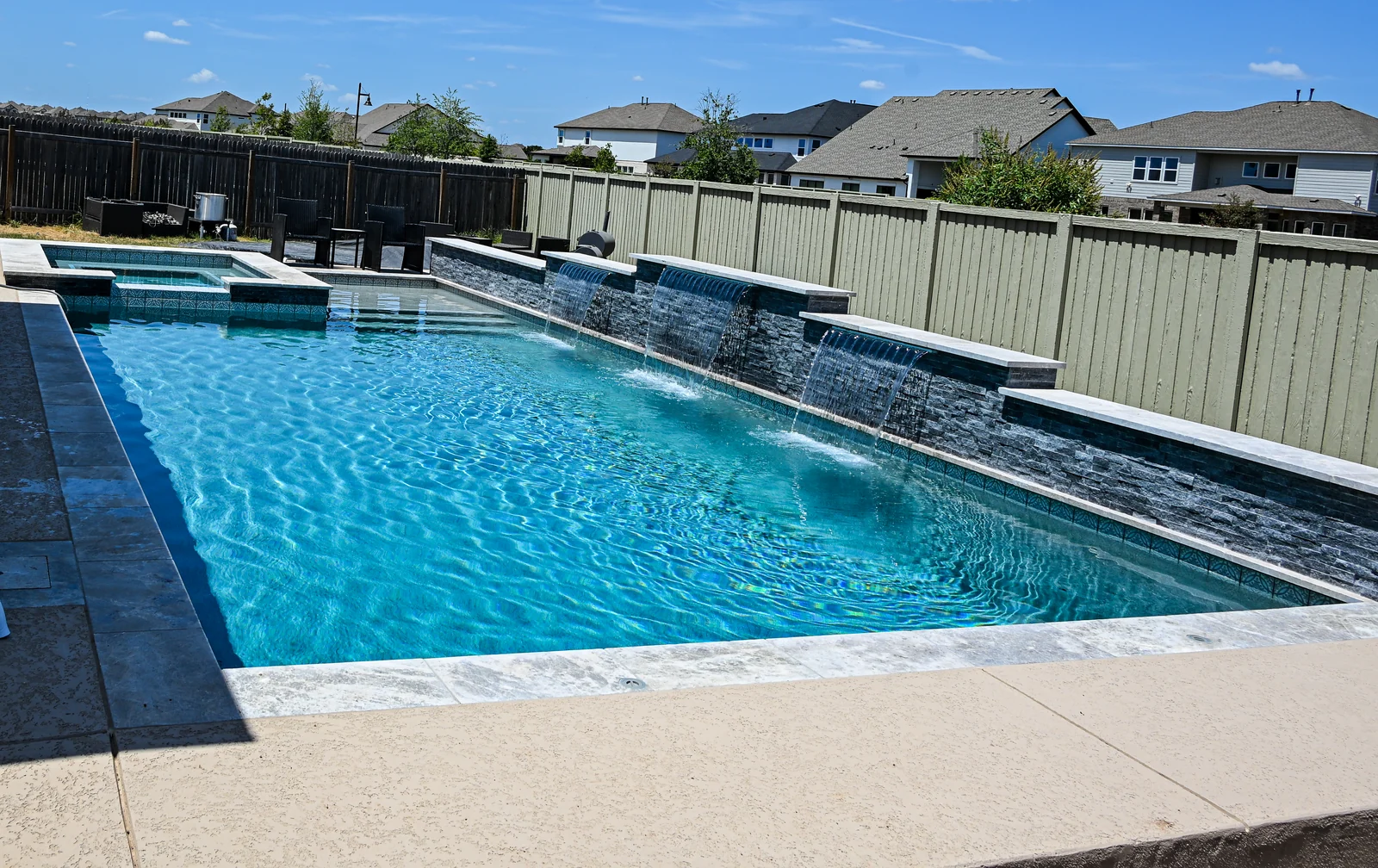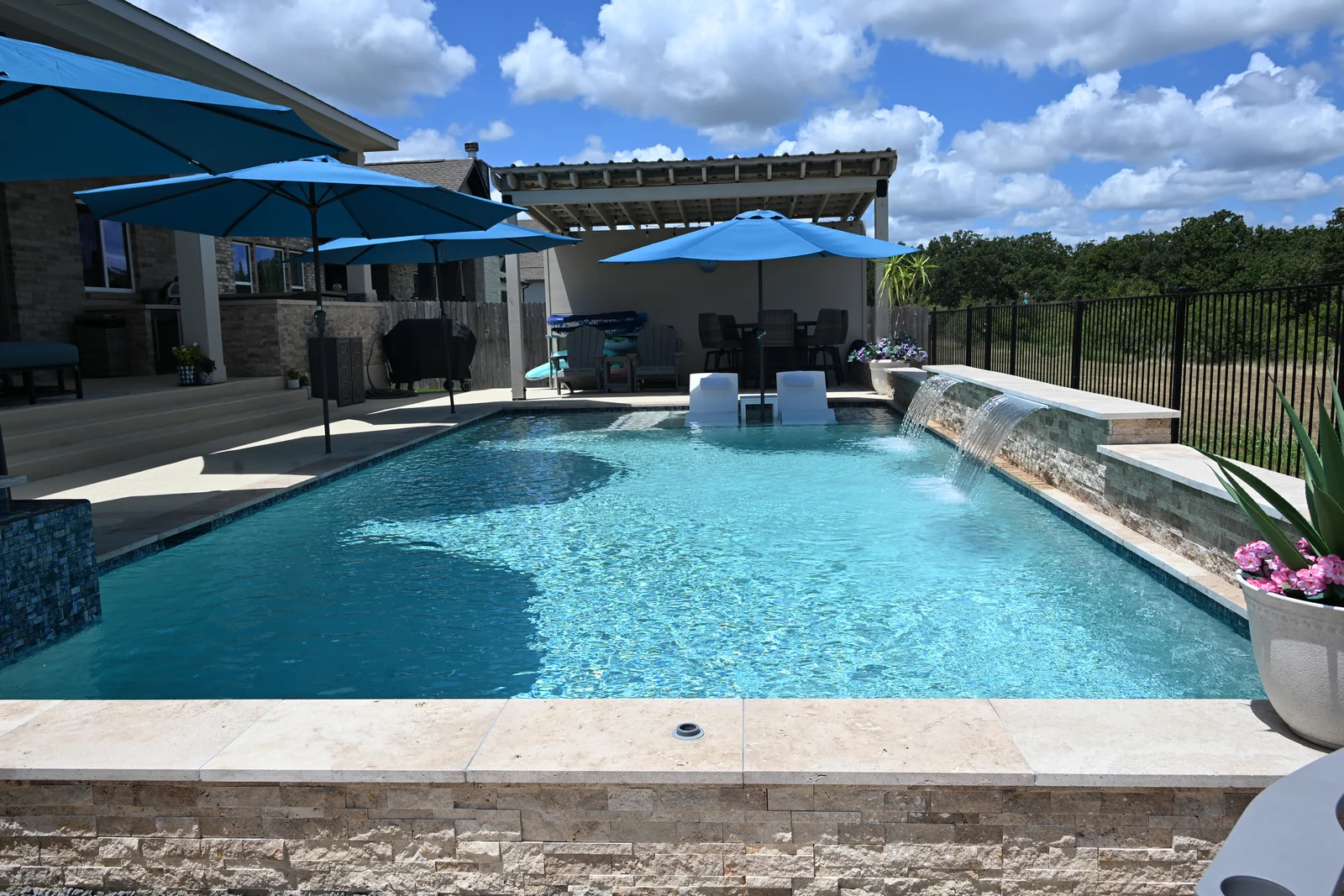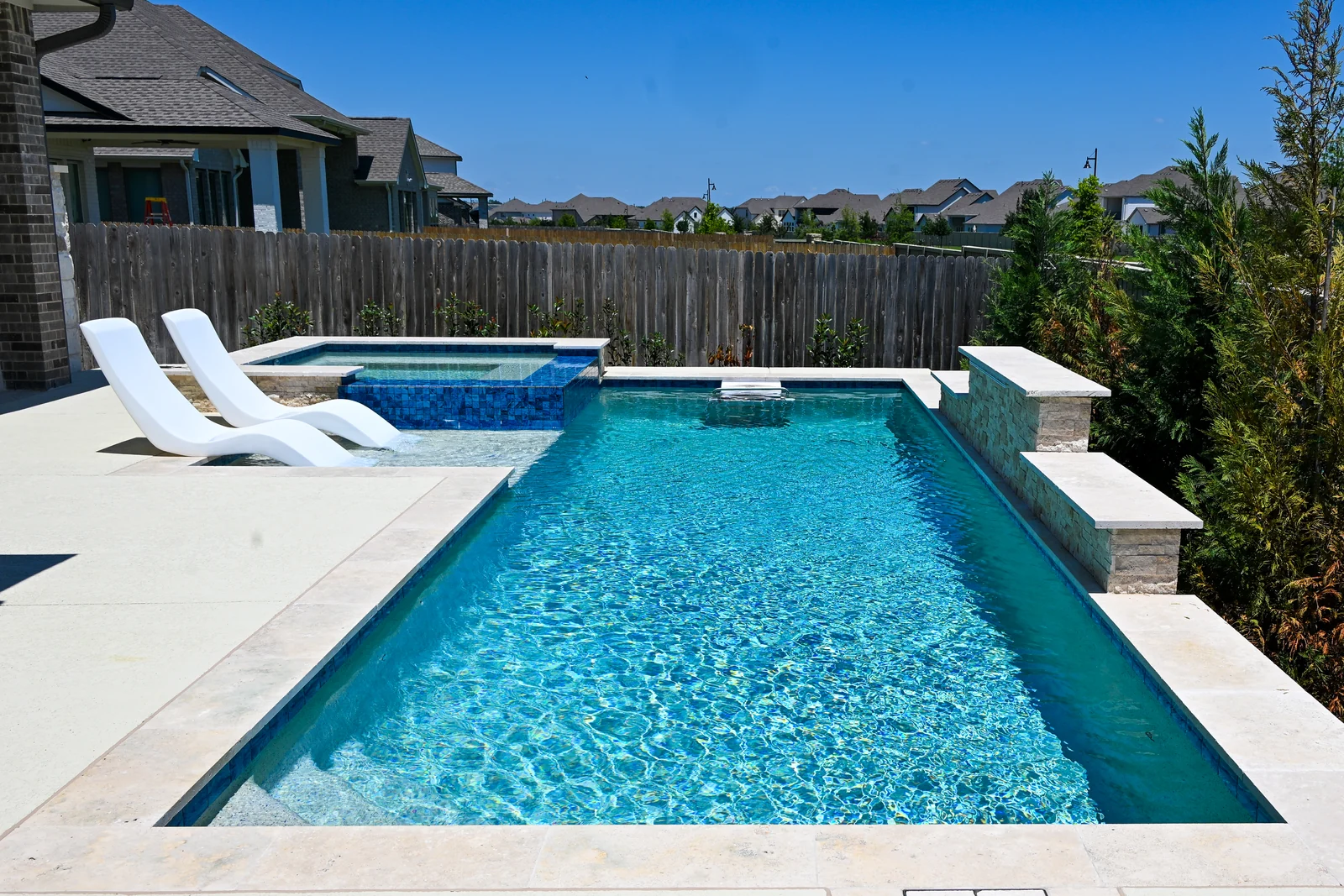
Gunite is a concrete and sand mixture sprayed at high pressure onto a steel rebar cage that has been shaped to the pool you designed. It is not poured into a form and it is not lowered into the ground as a finished piece. The shell is built in place, in your yard, in the shape you asked for.
That single fact is most of why we use it, and it is also why gunite costs more than the alternatives. Worth being straight about both.
The three ways a pool gets built
A fiberglass pool is manufactured in a factory as one molded piece and delivered on a truck. Installation is fast — often under two weeks — and the surface is smooth and easy on chemicals. The catch is that you are choosing from a catalog of molds. Shape, size and depth are whatever the manufacturer makes, and the whole thing has to physically fit down your driveway and around your house.
A vinyl-liner pool is a frame with a printed vinyl sheet stretched inside it. It is the cheapest way to get water in the ground. The liner is also a consumable: plan on replacing it roughly every seven to twelve years, and treat dog claws and dropped patio furniture as genuine risks.
A gunite pool is built to a drawing. Any shape, any depth, any transition. A tanning ledge, a negative edge, a spa sharing a wall, a bench cut into a curve — all of it is just a change to the steel before the shell is shot.
Fiberglass asks which of our shapes fits your yard. Gunite asks what shape your yard should have.
Why it matters more in Central Texas than most places
A lot of the yards we work in are not flat. Hill Country lots slope, and they sit on caliche and limestone. A one-piece fiberglass shell wants a level excavation and clean access for a crane or a large truck, and plenty of the lots around Lakeway, Jonestown and Marble Falls offer neither.
Gunite handles grade change instead of fighting it. A pool can step down a slope, sit against a raised wall, or catch a view over a negative edge — designs that only exist because the shell was formed on that specific piece of ground.
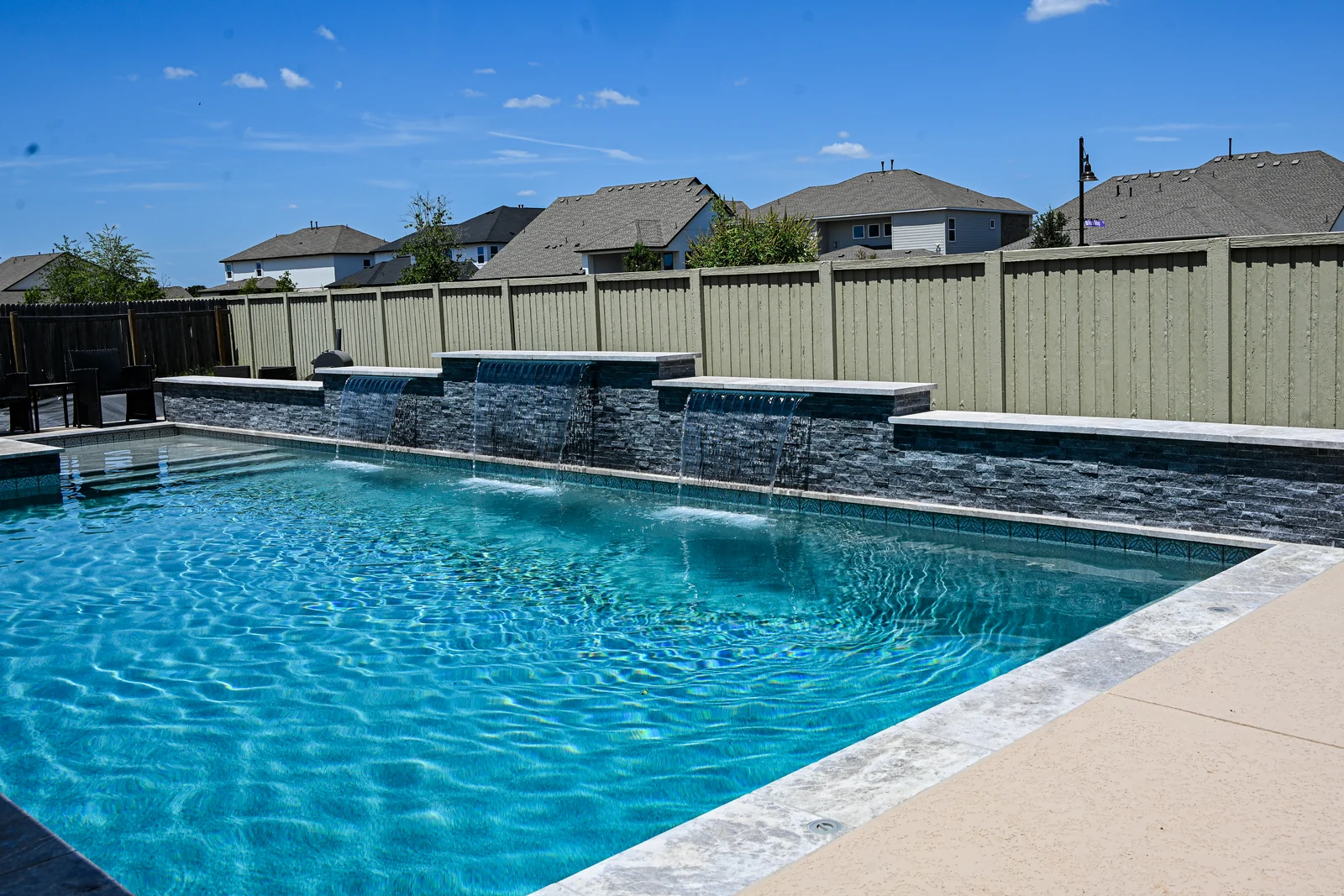
Our soil moves, too. Expansive clay and seasonal wet-dry swings put real stress on anything buried in it. A steel-reinforced concrete shell engineered for the site is the structure best suited to that, which is why gunite is what most Central Texas builders default to.
The honest downsides
- It costs more up front. Most of our gunite builds land between $85k and $145k with a standard plaster finish; premium finishes, water features and larger footprints push toward $180k–$220k.
- It takes longer. Six to ten weeks against roughly two for a fiberglass install, most of it cure time that cannot be rushed.
- The interior finish is a wear item. Plaster typically lasts ten to fifteen years depending on water chemistry, then wants replastering. Quartz and pebble finishes last longer and cost more.
- The surface is not as slick as fiberglass. Some people notice it underfoot; pebble finishes are the rougher end of the range.
What you get for it
A shell that is repairable and renovatable more or less indefinitely. We regularly replaster, retile and re-equip pools built in the eighties and nineties and hand back something that performs like new — for a fraction of what demolition and rebuild would cost. A fiberglass shell with a structural crack is a much harder conversation.
And you get the pool you actually drew. Every build starts with a computer-generated design that we bring back to your backyard and review standing in the space, against the trees and the grade and the view that are really there. Then we shoot that. No shells dropped in, no cookie-cutter rectangles.