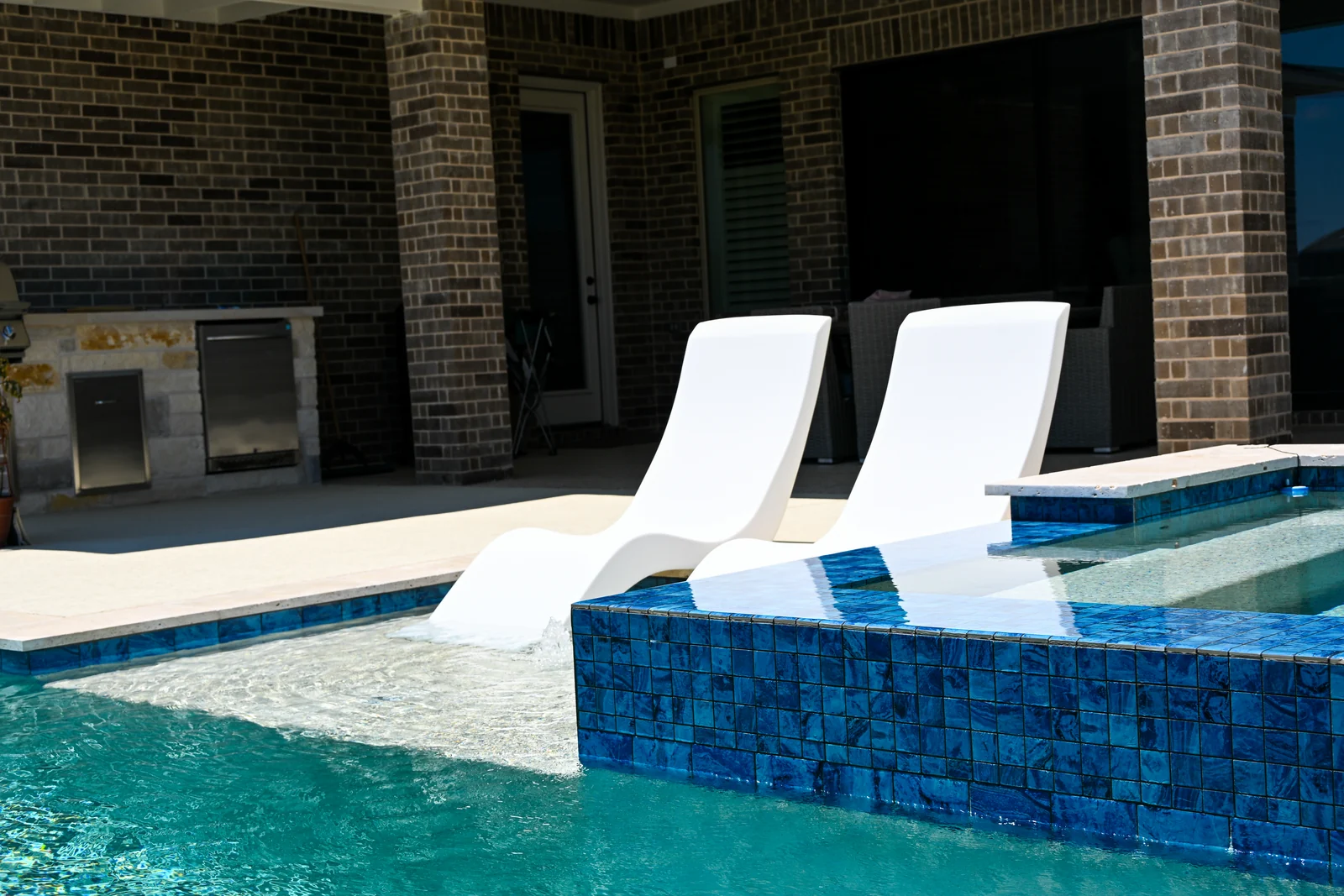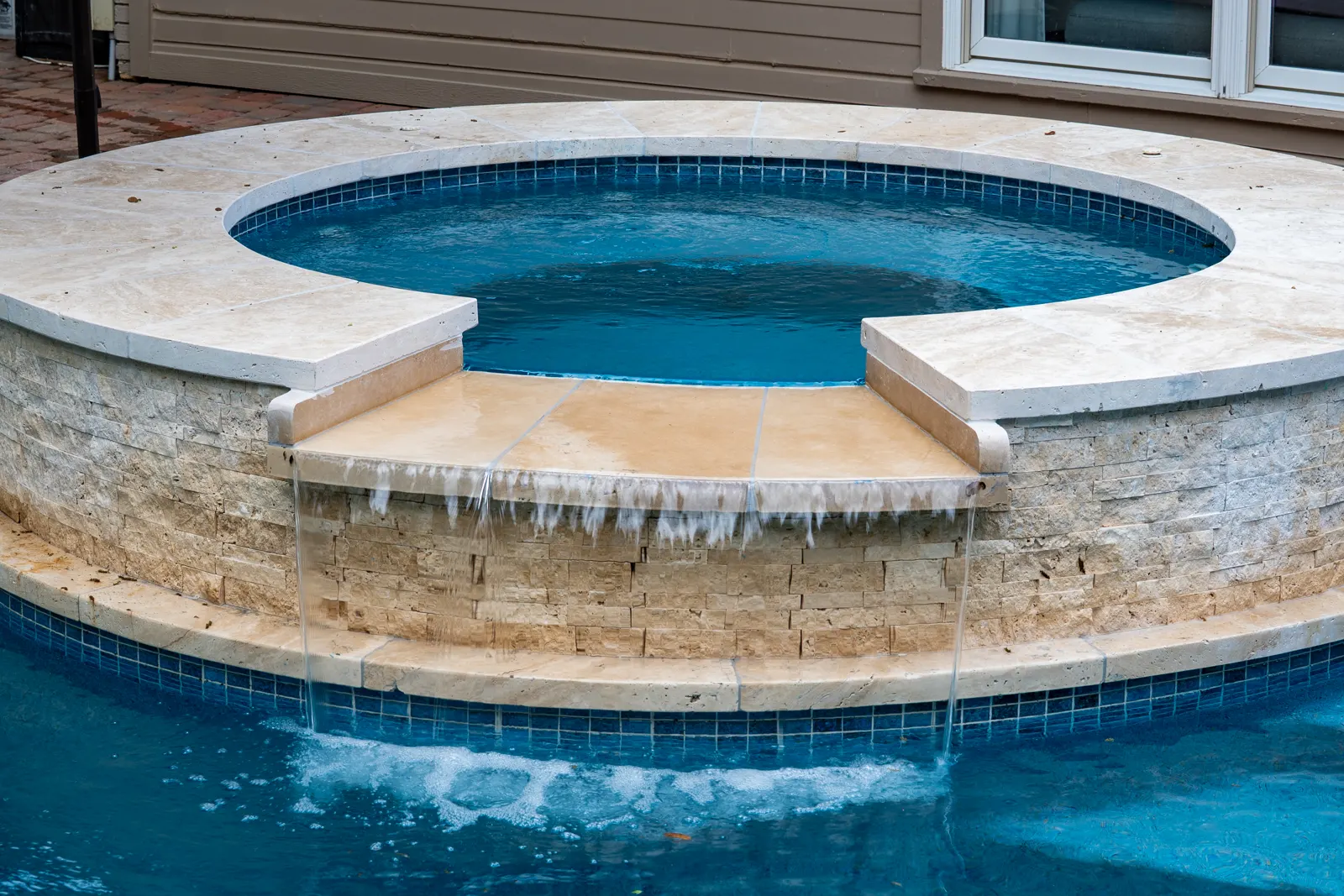
Adding a spa to a pool that is already in the ground is an equipment decision before it is a concrete one. The new shell is the visible part and the shorter part. What decides whether the job is simple on your property is the heater, the flow the pump can deliver, and whether the gas and electrical service at the pad can carry what the spa needs.
An attached spa is a second gunite vessel built against the wall of the existing pool, sharing that wall and usually spilling over it. It gets its own returns, its own suction and its own jets, plus a set of valves at the equipment pad that sends water either to the pool or to the spa. We build attached spas as one of our custom add-ons, and the shell is rarely the part that sets the schedule.
What actually gets built
The work is a small pool build attached to an existing one. Excavation comes in beside the shell, steel is tied into the pool bond beam so the two vessels move together, and the spa is shot in gunite the same way the pool was.
- Excavation beside the existing shell, which usually means part of the deck comes out and goes back.
- Steel tied into the pool bond beam, so the new wall is structurally part of the old one rather than set against it.
- Gunite for the spa shell, the shared wall and the spillway.
- A plumbing trench from the spa back to the equipment pad, carrying the spa returns, the suction and the jet line.
- Tile, coping and plaster, on both vessels rather than only the new one.
That last line is the one people do not expect. Plaster is mixed and troweled on site, and a new spa finish beside a pool finish that has been under water for years will not match. The honest version of this job is a spa plus a surface pool renovation, which is also the argument for doing it while the pool is drained anyway.
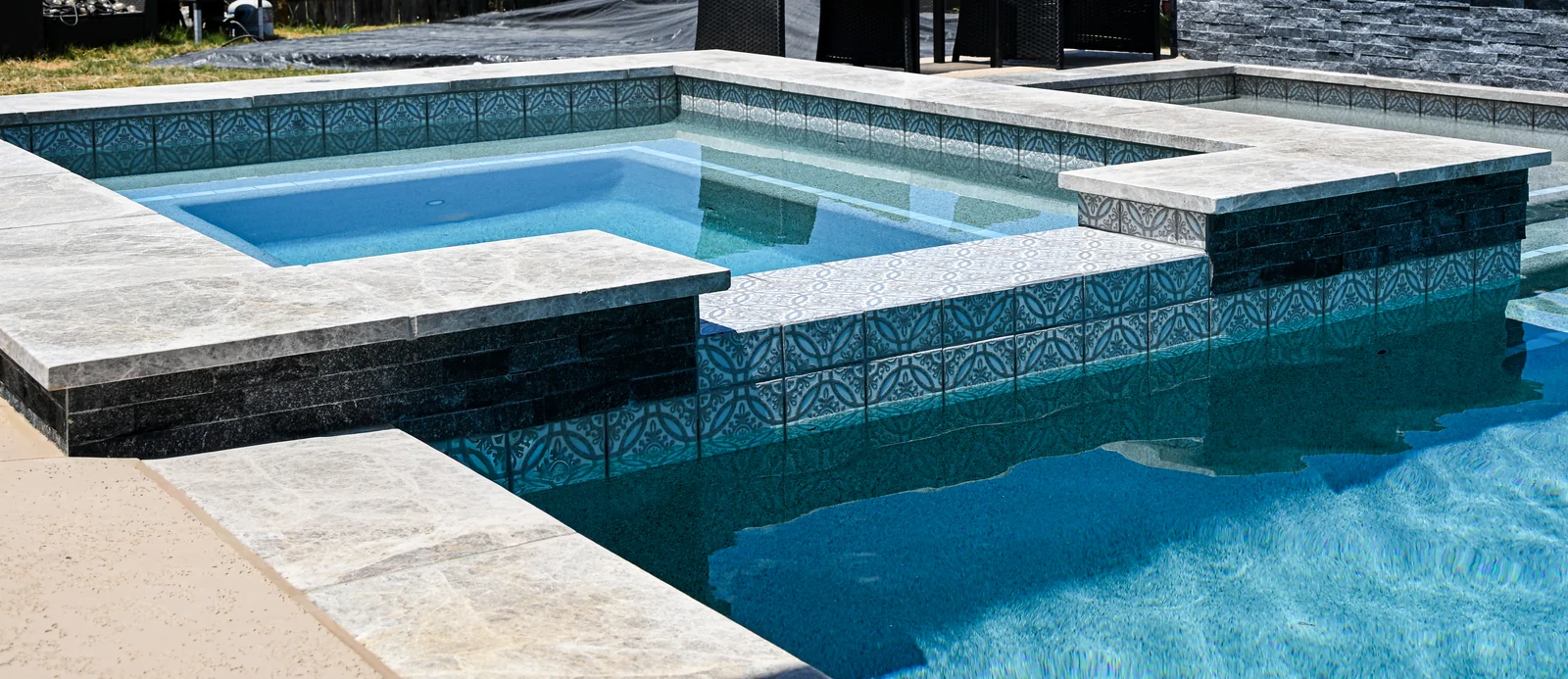
The shell is the short part. The heater, the pump and the gas line are what decide whether this is straightforward on your property.
The heater is the real decision
A spa has to come up to temperature in a sitting, which is a different job from holding a pool warm. Gas heaters are sized for it. Pentair publishes the MasterTemp in three sizes, 200,000, 250,000 and 400,000 BTU per hour, at a minimum 82 percent efficiency.
That 82 percent is a federal floor as much as a product specification. The U.S. Department of Energy sets it as the minimum thermal efficiency for gas-fired pool heaters, and replaces that measure with an integrated thermal efficiency standard for heaters manufactured from 2028. A heater bought now is built to the rule as it stands today.
Gas heater or heat pump
A heat pump is the cheaper way to hold a pool warm and the wrong tool for a spa you want hot this evening. Pentair rates the UltraTemp 140 at 145,000 BTU with a COP of 5.8 at 80 degree air, 80 degree water and 80 percent humidity. The same unit is rated at 90,000 BTU and a COP of 4.0 at 50 degree air and 63 degree water, which is closer to the night you would actually want the spa.
That is the whole argument. A heat pump gives up output exactly when the spa is wanted, and it is pulling a 50 amp circuit at 230 volts to do it. Most attached spas here get a gas heater, and a heat pump earns its place on the pool side, which is the same reasoning behind the rest of our energy efficient equipment work.
What the pump has to do
A heater will not fire below its minimum flow. Pentair gives the 400 model a range of 40 to 120 gallons per minute, and minimums of 20 and 25 gallons per minute for the 200 and 250 models. A pump sized for a long, slow filtration cycle still has to reach spa-side flow on demand, and on a shared pad that is a plumbing question too.
If the pump is being replaced anyway, it is being replaced with a variable speed one. Under the U.S. Department of Energy rule at 10 CFR 431.485, dedicated-purpose pool pump motors from 1.15 to 5 total horsepower manufactured from September 2025 must be variable speed, and the smaller class follows in September 2027. What that does to a running cost is in our post on variable speed pumps.
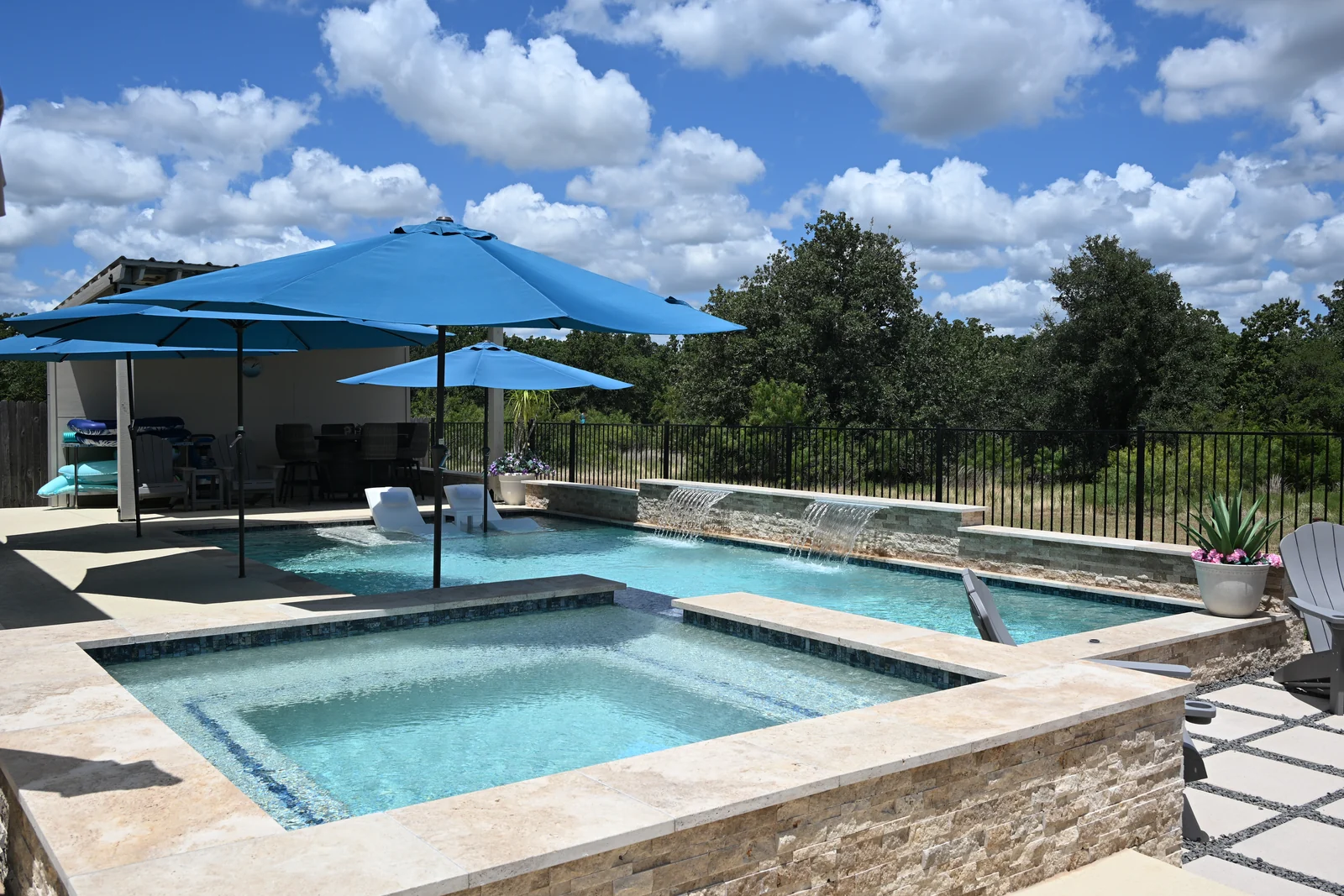
Gas, electrical and the permit
The gas line is the item most likely to surprise a homeowner. A MasterTemp takes a 0.75 inch gas connection and 2 inch water connections, and the 400 model weighs 149 pounds, so the pad needs the room and the supply has to still carry the load at the far end of the run. An existing line sized for a pool heater is not automatically sized for a bigger one.
Permits are not optional. The City of Austin exempts from a building permit only a swimming pool that is prefabricated and less than 24 inches deep, and says anything not covered under Section 801.1 of the 2024 International Swimming Pool and Spa Code is exempt. A gunite spa is neither. Austin also issues separate plumbing, electrical and mechanical trade permits, and a licensed, registered trade contractor has to request each one and be assigned to it.
When a spa earns its keep
The spa works in the months the pool does not. The National Weather Service puts the Camp Mabry normal high at 71.5 degrees in November, 63.9 in December, 62.5 in January, 66.5 in February and 73.3 in March, with normal lows of 50.5, 43.4 and 41.8 across those three winter months. Unheated pool water in that stretch is not swimming water.
Set against 122.8 days a year at or above 90 degrees and 11.9 days at or below freezing, the spa is what makes the cold half of the year usable outside. Autumn is the sensible time to build one, because the work happens while the pool is already out of use and the spa is ready before the first real cold snap.
If you are considering it, send us the pool, where it is, and a photograph of the equipment pad. Most of what decides this job is visible there, and we would rather tell you what the gas line and the pump mean before anyone talks about shapes.