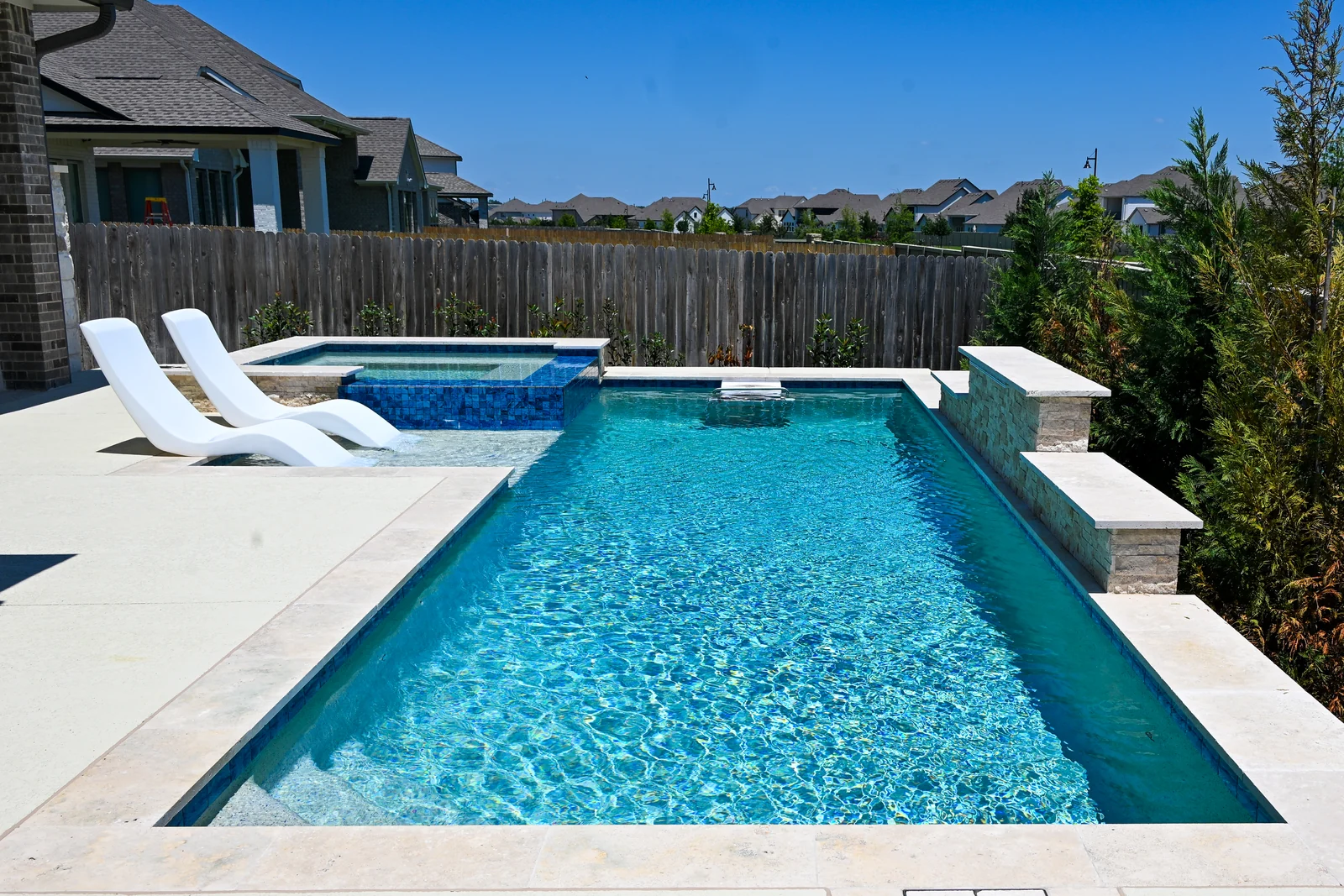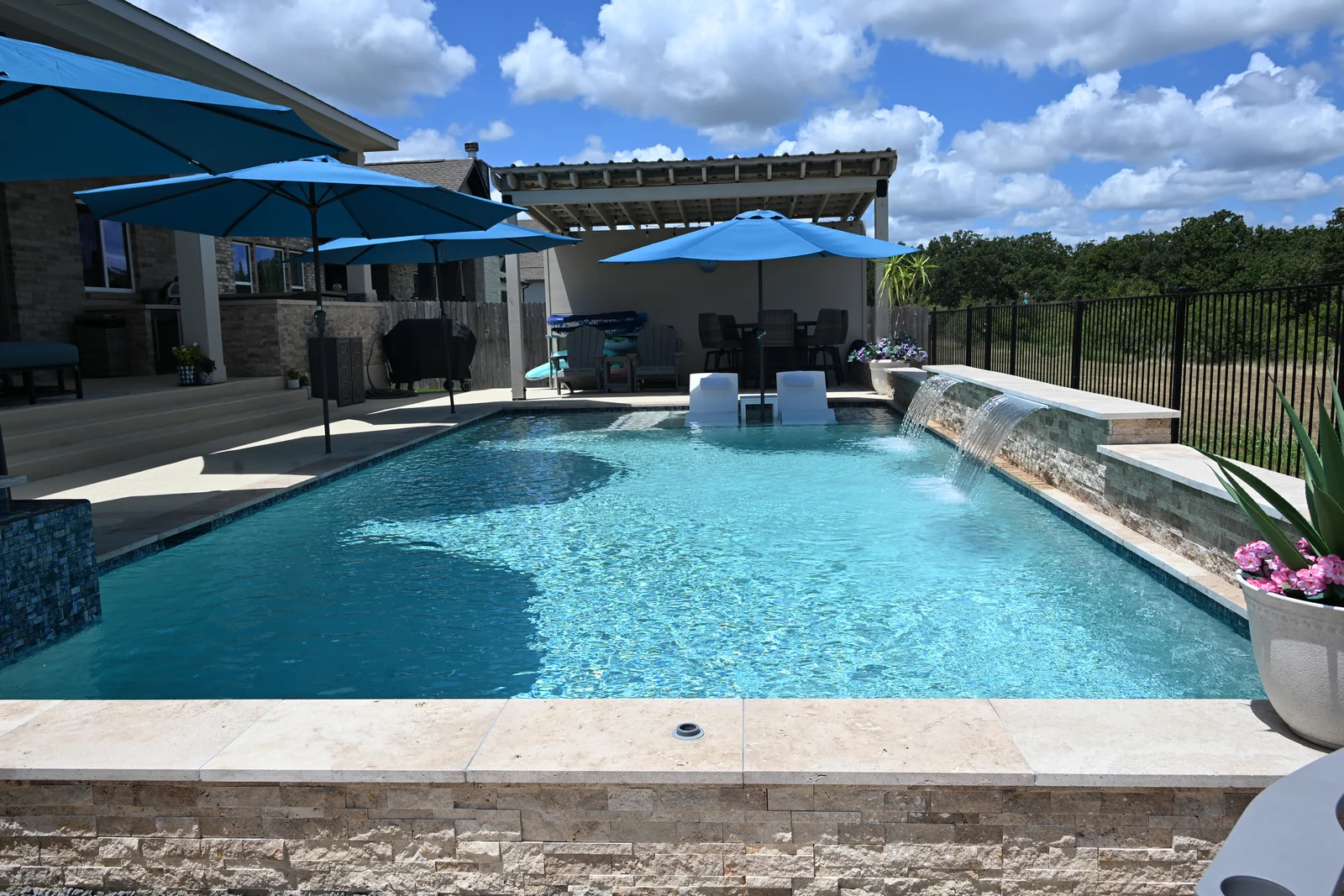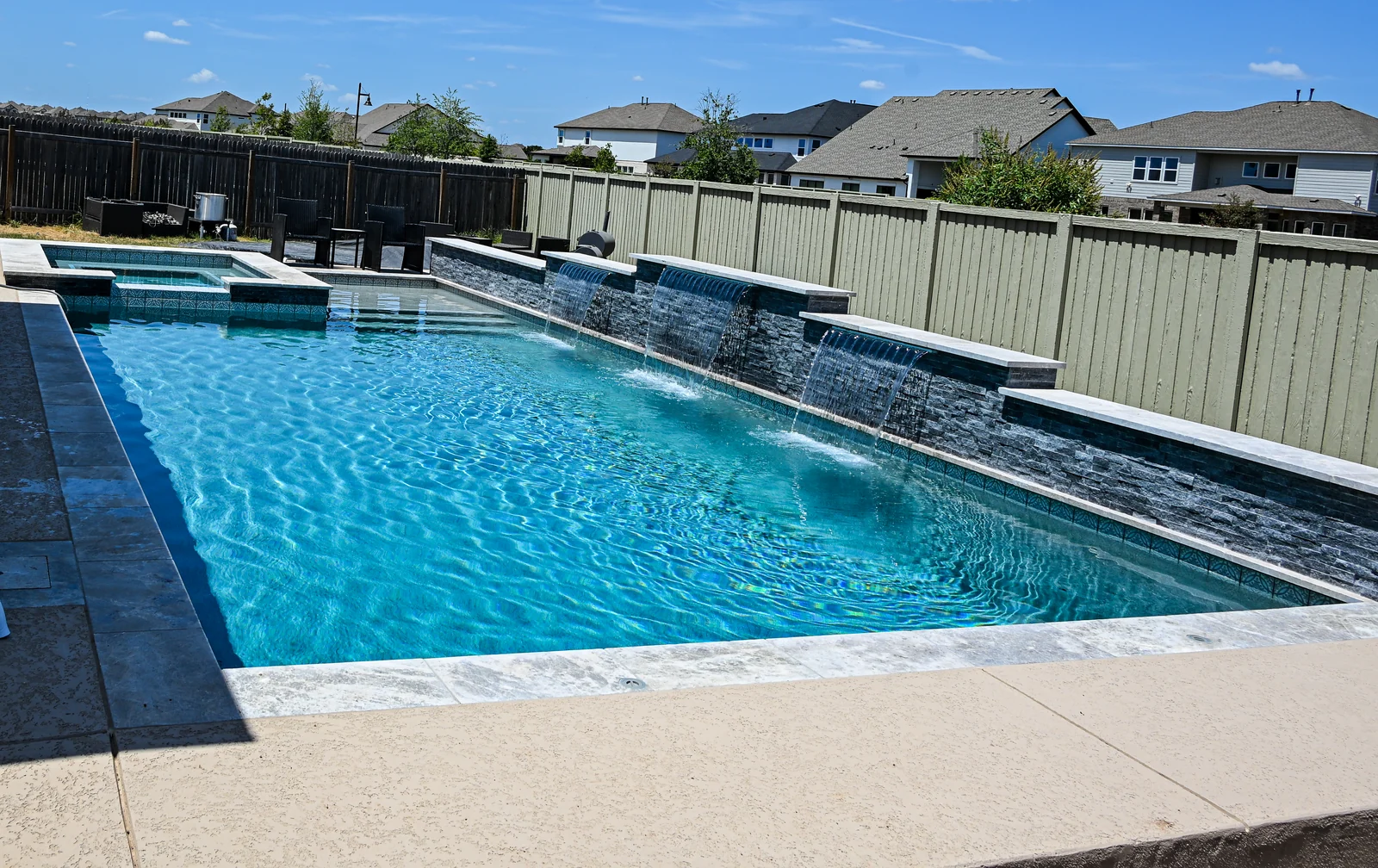
Six to ten weeks from dig to swim-ready is the number we put in writing, and it holds for most standard gunite pools. What surprises people is where the weeks actually go. Very little of the schedule is the crew standing in the yard. Most of it is cure time, inspections, and the gaps between trades — and that is true of every honest builder in Central Texas, not just us.
Here is the sequence, roughly in order, with the parts that genuinely move.
Before anything moves: design and permits
We start engineering drawings the same week the contract is signed, because the permit office is the one queue we cannot shorten. In most Central Texas cities a building permit runs two to four weeks. Electrical is usually issued alongside it. If your neighborhood has an HOA architectural committee, that review runs on its own calendar and is frequently the longest single wait in the whole project.
None of that shows up in the 6–10 weeks. The clock we quote starts at permit approval, and we say so on the schedule rather than folding the wait in and hoping you do not notice.
Week one: excavation
Layout gets painted on the ground and you walk it before a machine touches anything. That walk matters more than it sounds — seeing the actual footprint in your yard is when people move a pool two feet or rotate it slightly, and it costs nothing at that moment.
Then we dig. Around here that is where the ground decides how the week goes. Caliche digs quickly. Solid limestone shelf does not, and if the excavator hits rock that needs breaking, that is real added time and real added cost. We flag the possibility during the site visit rather than after.
Weeks two and three: steel, plumbing, gunite
Rebar is tied to the engineered drawing, plumbing and electrical conduit are run, and both get inspected before anything is buried. Then gunite is shot — the shell is sprayed in place in a single day, which is the part everyone wants to watch.
Gunite takes a day to shoot and a week to cure. The cure is not padding; it is the pool getting its strength.
After the shoot, the shell needs roughly seven days of curing and daily watering. There is no compressing that, and a builder who tells you otherwise is planning to hand you a shell that is weaker than it should be.
Weeks four through seven: tile, coping, decking, equipment
This is the stretch with the most trades and therefore the most opportunity for a schedule to slip. Tile and coping go on, decking is formed and poured, and the equipment pad is built and wired. Concrete decking needs its own cure before anything heavy sits on it.
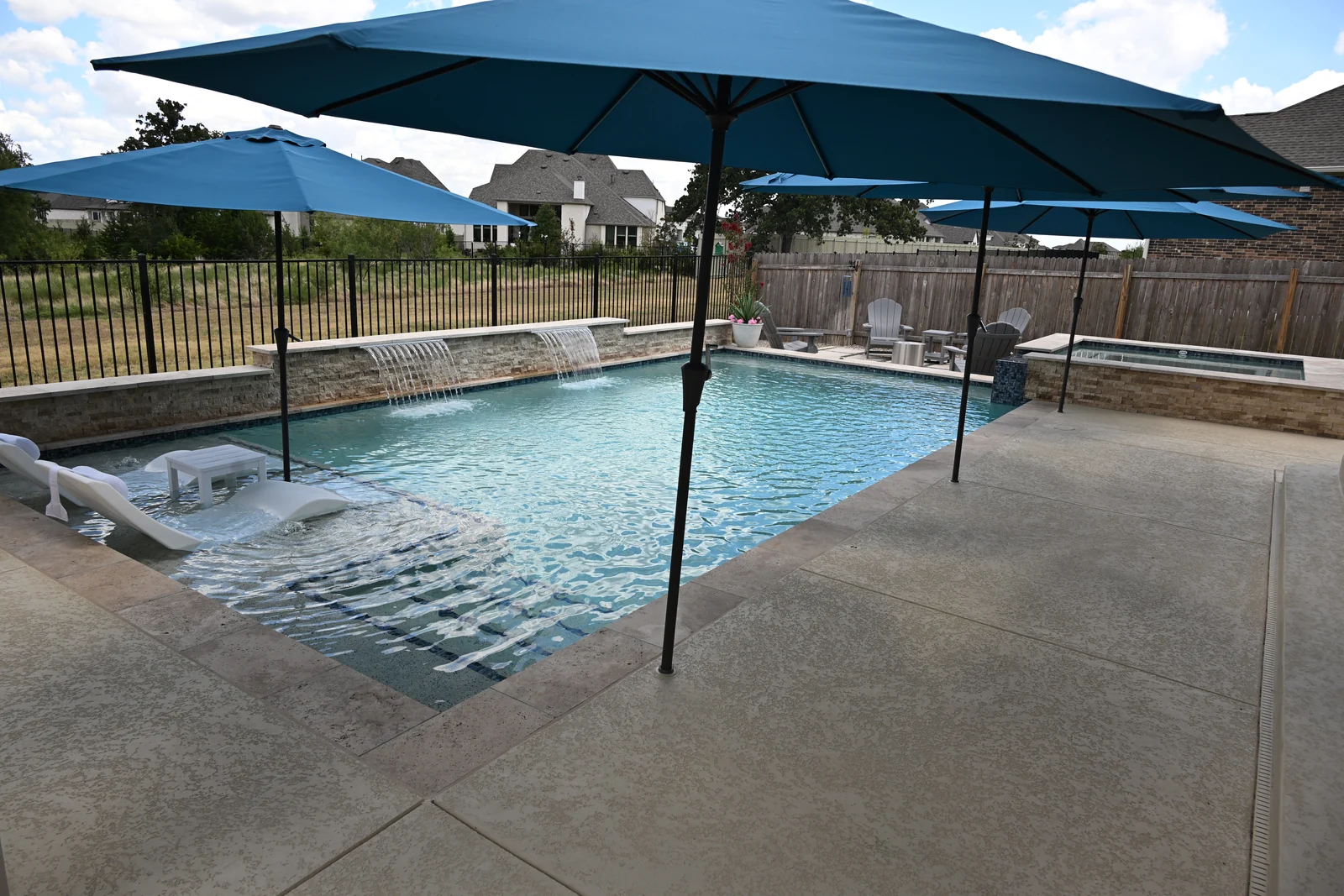
If you are adding a spa, a water feature, or an outdoor kitchen, this is where it happens, and it is why custom add-ons are dramatically cheaper at build time than as a retrofit. The deck is already open and the trades are already on site.
Weeks eight to ten: plaster, fill, startup
Interior finish goes on last — plaster, quartz, or pebble — and the pool is filled immediately after, because plaster should not sit dry. Then comes about a week of startup: brushing daily, balancing chemistry, and getting the equipment dialed in. You can swim during startup. The water just needs attention for the first stretch.
What actually causes delays
- Rain. A wet hole cannot be dug and wet ground cannot take a concrete truck. A stretch of Central Texas spring storms can absorb a week without anyone doing anything wrong.
- Rock. Limestone that has to be broken rather than dug adds days and cost, and it is not always visible from the surface.
- HOA review. Frequently the longest wait, and entirely outside the builder's control.
- Change orders mid-build. Moving a spa after the steel is tied means undoing work. Decisions made at the design table are free; the same decision at week four is not.
What we do about it
You get a written schedule before we dig, and it gets updated every week — with photos and texts, not a portal login. If something slips, you hear it from us with the reason attached. Donna and Ben are the people you talk to, the same two people who walked your yard in the first place. There is no project manager relaying messages, because there is no one to relay them to.