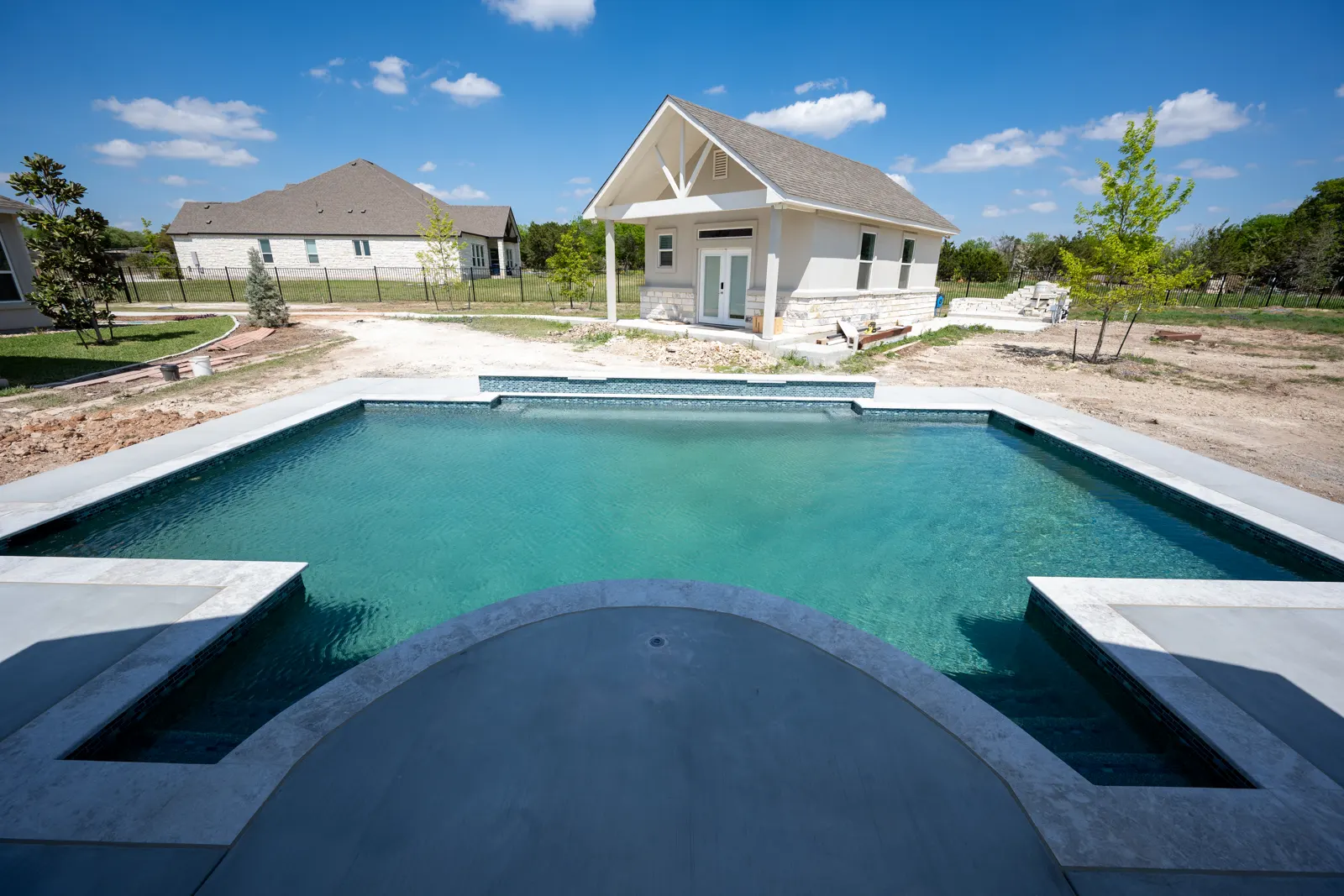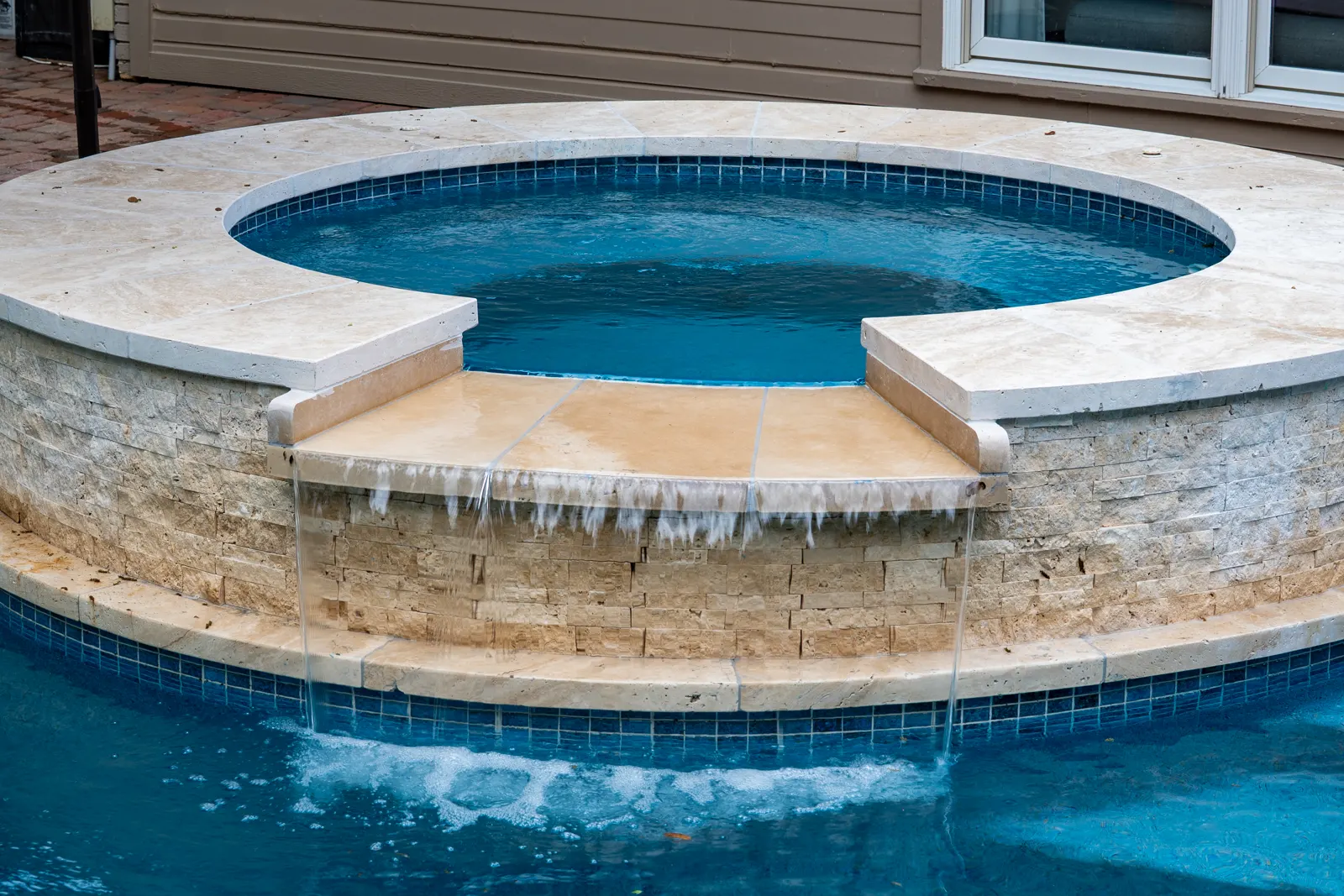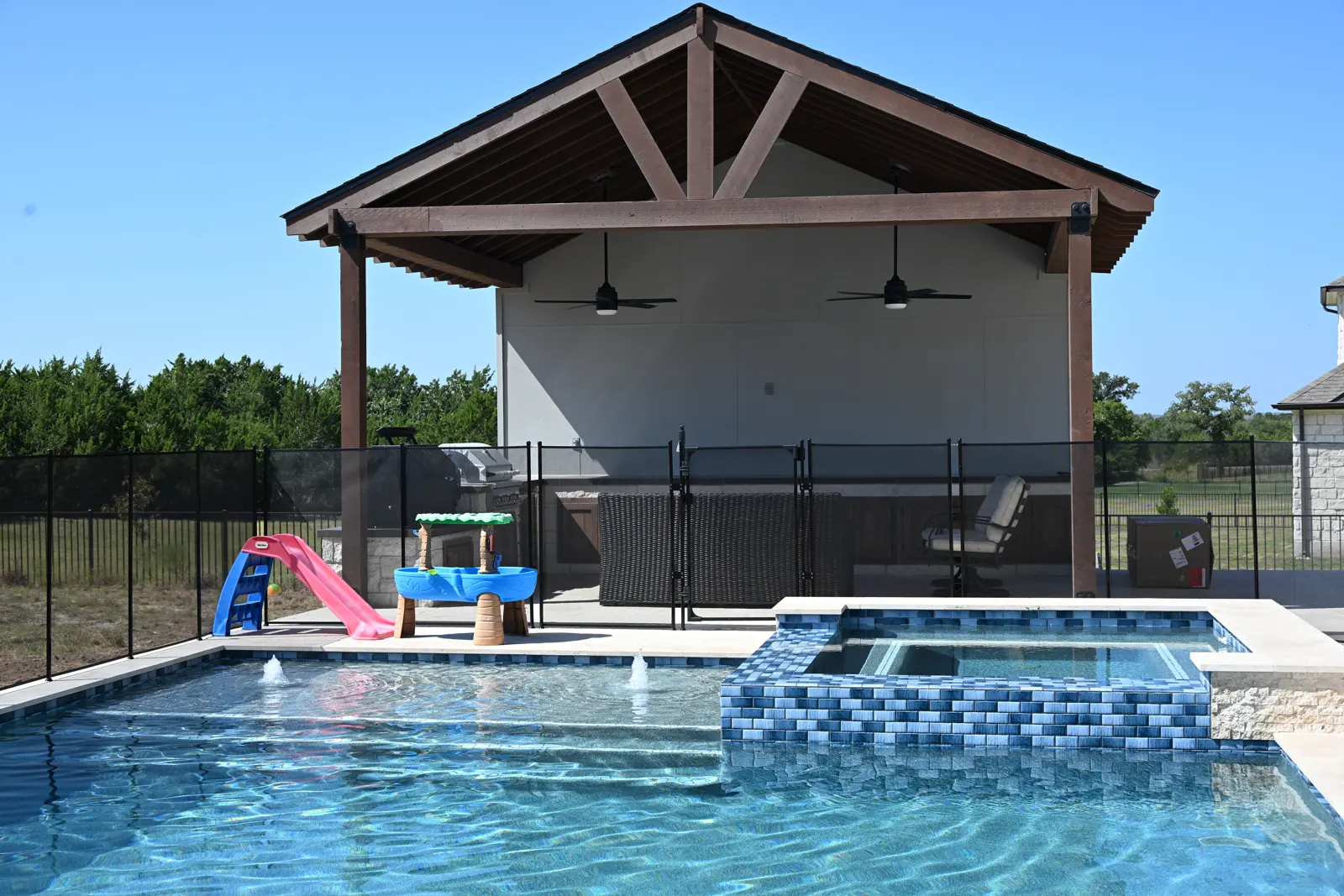
A heat pump pool heater is the efficient choice for holding a pool at temperature through a mild Central Texas spring and fall, and a gas pool heater is the fast choice for heating water on demand in any weather. Which one suits a particular pool comes down to when the owner wants to swim, how quickly they want warm water, and whether there is a spa that needs heating in a hurry.
How a heat pump pool heater works
A heat pump pool heater does not make heat so much as move it. AHRI, the trade association that writes the rating standard for these units, describes the cycle plainly: a fan draws outdoor air across a coil, refrigerant in the coil absorbs that heat, a compressor raises its temperature, and a heat exchanger hands it to the pool water passing through. The electricity runs the compressor and the fan, and most of the heat delivered to the water comes out of the air.
AHRI notes that the electrical input of a heat pump pool heater, converted to heat units, only amounts to roughly 14,000 BTU, while the bulk of the output is heat taken from the surrounding air. That is why the efficiency figures look so different from anything that burns fuel.
How efficient is each type of pool heater?
A heat pump is rated by its coefficient of performance, or COP, which AHRI defines as heat output divided by energy input. Typical COP values for heat pump pool heaters run from 4.0 to 6.0, meaning four to six units of heat in the water for each unit of electricity. The US Department of Energy notes that many heat pump pool heaters are rated at a COP of 6.0, which it expresses as a thermal efficiency of 600 percent, a level it puts at roughly the top 10 percent of the market.
A gas pool heater is rated by thermal efficiency, the share of the fuel's energy that ends up in the water. The federal standard for gas-fired pool heaters requires 82 percent for products of all capacities. On efficiency alone the heat pump wins by a wide margin.
A heat pump is built to hold a temperature. A gas heater is built to get there quickly.
Why air temperature changes the answer
A heat pump's output falls as the air it draws from gets cooler. The US Department of Energy's 2023 pool heater rule models exactly that: heat pump output capacity varies with ambient air temperature, while gas-fired heater output is treated as not varying with it. A gas heater delivers its rated heat on a cold January evening the same as on a warm April one.
Speed follows from that. AHRI says heat pump pool heaters are best used to maintain a constant water temperature and are not intended for instant or fast heating. A heat pump set to a temperature and left alone suits it; a heater switched on Saturday morning for a Saturday afternoon swim does not.
What the Central Texas calendar says
NOAA's 1991-2020 climate normals for Austin Camp Mabry show why a heat pump has a long, useful season here. The normal daily high is 82.5 degrees in October with a low of 60.8, and 80.3 in April with a low of 58.9. March runs 73.3 by day and 52.2 by night, and November 71.5 and 50.5. Those are the shoulder months when the water is too cool for most people and the air is still warm enough for a heat pump to work well.
Midwinter is a different picture. January, the coldest month in the Austin normals, averages a high of 62.5 and a low of 41.8. December runs 63.9 and 43.4, and February 66.5 and 45.8. A heat pump still runs in those months, but with less capacity at the moment the pool is losing heat fastest, which is where a gas heater earns its place.
Which pool heater fits which owner?
- Owners who want to stretch the season into March, April, October and November, and keep the pool at a steady temperature, are the natural fit for a heat pump.
- Owners with an attached spa they want hot on short notice, or who swim only now and then in winter, are better served by gas, which heats at full output regardless of the air.
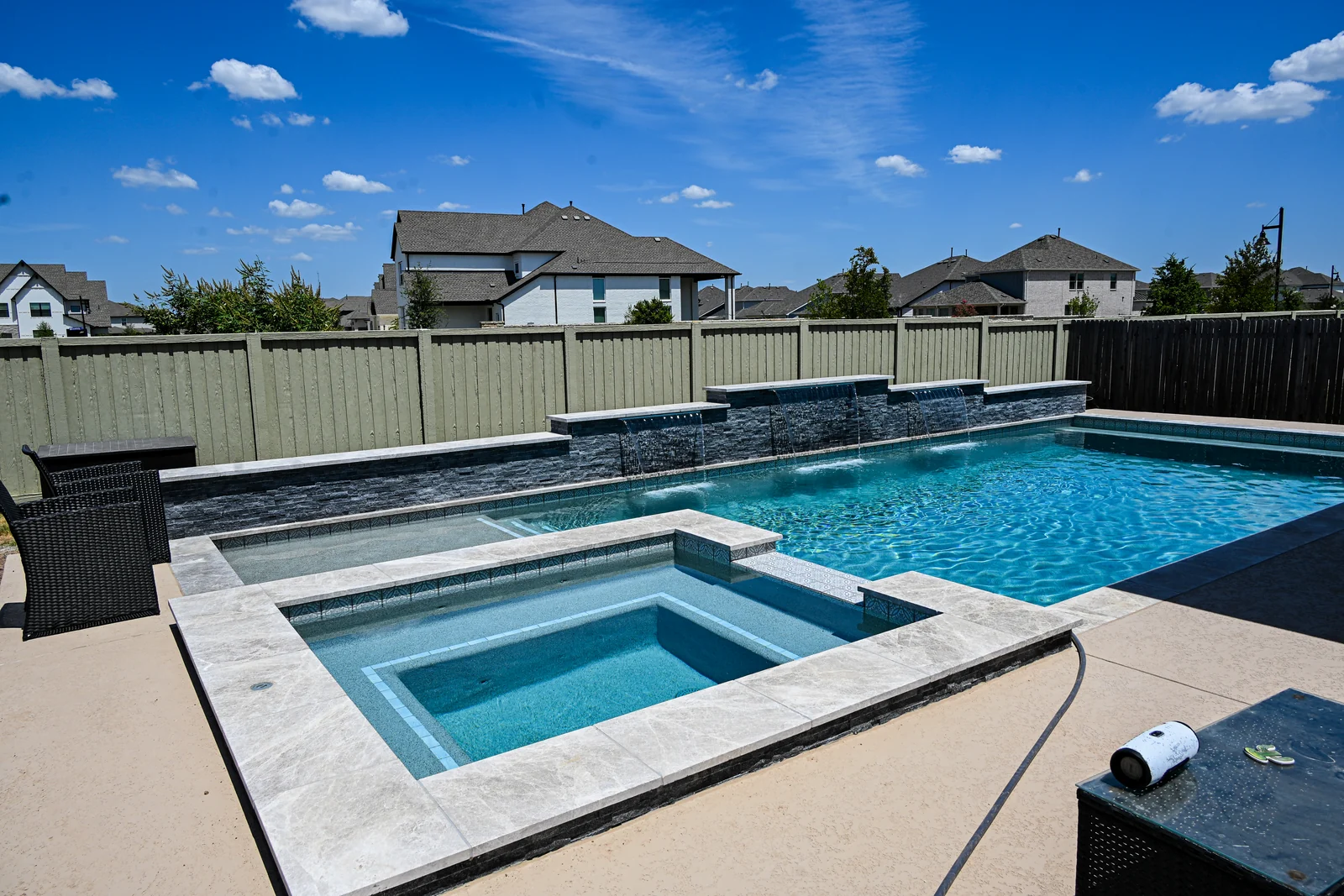
- Owners who want both get both. The US Department of Energy defines a hybrid pool heater as one that uses a heat pump and a fuel burner together, and a pool with a spa can carry both on one equipment pad.
Whichever heater goes in, a cover matters. AHRI calls a solar or pool cover highly recommended for both energy savings and reasonable heat-up times.
Placement and upkeep that decide how long a heater lasts
A heat pump needs air, so where it sits matters as much as which model it is. AHRI's guidance is to keep plants trimmed back, keep the air intake and discharge clear, keep sprinkler heads from spraying the unit to prevent corrosion, and set it level so condensate drains away. Condensate dripping from a heat pump on a hot, humid day is normal, not a leak.
Life expectancy depends on care. The US Department of Energy's lifetime data for pool heaters ranges from 1 to 30 years with a mean of 11 years, and manufacturers told the department that improper winterization can shorten a heat pump's life.
Replacing an old gas heater
Federal pool heater standards change on May 30, 2028. The US Department of Energy found 96 percent of gas-fired and 81 percent of electric pool heater shipments already meet the new level, and the gas models expected to need redesign are those with a standing pilot light, which burns fuel even when the heater is idle. If an existing heater still has a standing pilot, it belongs to the least efficient group on the market.
A heater at the end of its life is the cheapest moment to rethink the setup, because the plumbing and electrical work is happening anyway. Our pool renovation work often starts at the equipment pad for that reason, and the energy efficient equipment page covers the heat pumps, variable speed pumps and covers we install. On a custom pool construction, the heater is chosen with the pool, so a pool with a spa is planned for fast spa heat from the first drawing. Trinity Pool Construction can look at your pool and what is on the pad now, and tell you which heater suits it.